LEONE STEWART
A BIBLIOGRAPHY
Novels | Short Stories | Plays
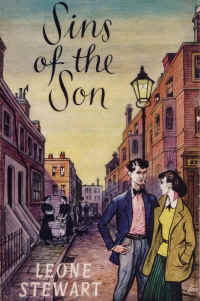
Sins of the Son
Published by Hutchinson, 1954
This novel tells the story of a father who has spent time in prison and is trying to stop
his son from making the same mistakes. It received favourable reviews from the critics at
the time of its publication, with The Kensington Post & W. London Star
describing it as "poignant and compelling". Another reviewer in The Times
Literary Supplement had this to say: "Her first novel succeeds because it has
that compassion and understanding without which no character-drawing can be
successful." Stewart clearly drew on her own study of social problems and juvenile
delinquency for the writing of this book. Furthermore, her experience in the acting world
would, no doubt, have inspired the scenes in Sins of the Son that take place in
theatrical lodgings.
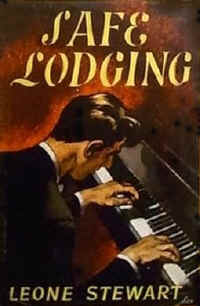
Safe Lodging
Published by Hutchinson, 1955
The triumphs and disappointments of a young woman trying to forge a career as a repertory
actress and those of a concert pianist with ambitions are explored in this second novel by
Leone Stewart. Safe Lodging was also well received by the press. Writing in The
Western Mail & South West News, one reviewer praised it for being "full of
human insight and understanding" while the book reviewer for Nottingham's The
Guardian Journal applauded how "convincingly drawn" the characters in the
story were. After the publication of this book, Stewart stopped writing novels and focused
on penning short stories for periodicals and plays for screen, stage and radio, the latter
in collaboration with her sister, Aileen Burke.
"One Good Turn"
Reveille, May 3, 1955
"Rehearsal for Murder"
Reveille, June 7, 1955
The Sunday Standard (Singapore), June 26, 1955
"One Good Turn ..."
Reveille, September 23, 1955
The Sunday Standard (Singapore), October 9, 1955
Although this tale shares the same title as one that was published in the May 3, 1955
issue of Reveille, I can confirm, having read both, that they are not the same
story.
"Dumb Insolence"
Reveille, October 11, 1955
"Double and Quits"
Reveille, November 22, 1955
"Barking Up the Wrong Tree"
Reveille, January 3, 1956
"Courage Earns a Bonus"
Reveille, September 11, 1956
"Patient Mother"
Reveille, October 9, 1956
"Hand in Glove"
The Sunday Standard (Singapore), September 1, 1957
This is almost certainly a reprint of a short story that had previously appeared in a
British periodical. The original publication details are unknown to me at the time of
writing.
"House Proud"
The Sunday Standard (Singapore), January 5, 1958
This is almost certainly a reprint of a short story that had previously appeared in a
British periodical. The original publication details are unknown to me at the time of
writing.
"The Lady at the Back"
The Australian Women's Weekly, March 2, 1960
This is almost certainly a reprint of a short story that had previously appeared in a
British periodical. The original publication details are unknown to me at the time of
writing. Interestingly, this tale shares the same title as a humorous radio play
co-written with Aileen Burke that was first broadcast by the BBC Home Service on May 27,
1959. I have, so far, been unable to ascertain whether or not this short story shares the
same plot as the play.
"All Kinds of Profit"
The Evening News, November 1, 1961
A reading of this short story was broadcast by the WBAI radio station in New York City on
May 13, 1966. The narrator was David Garth. It was also broadcast by the WDUQ FM radio
station in Pittsburgh on April 14, 1967. "All Kinds of Profit" was aired in the
United States by courtesy of the BBC, but I have been unable to trace the original
transmission date in England for this tale. "All Kinds of Profit" shares the
same plot as the play "The Cuppa", which Stewart wrote with Aileen Burke. The
short story is clearly a condensed, prose version of the play, which was first broadcast
on the radio by the BBC Home Service on November 19, 1960.
"Cooler Inside"
The Evening News, February 24, 1962
The Birmingham Evening Mail, July 30, 1963
"The Girl Who Waited"
The Evening News, July 24, 1962
"Poor Risk"
The Evening News, October 8, 1962
"Spit'n' Image"
The Evening News, February 16, 1963
The Birmingham Evening Mail, June 6, 1967
"Sticky Meeting"
The Evening News, April 6, 1963
The Birmingham Evening Mail, September 1, 1967
"Present Problem"
The Evening News, June 21, 1963
The Birmingham Evening Mail, December 15, 1967
"Something to Remember"
The Evening News, July 29, 1963
The Birmingham Evening Mail, February 5, 1968
"Over the Hedge"
The Evening News, August 27, 1963
"Safe Conduct"
The Evening News, October 9, 1963
The Birmingham Evening Mail, May 1, 1968
"Postman's Shock"
The Evening News, December 21, 1963
"Canny Nell"
The Evening News, January 4, 1964
"Into Thin Air"
The Evening News, January 27, 1964
"Smoked Out"
The Evening News, April 30, 1964
"Help Yourself"
The Evening News, May 25, 1964
"Lily of the Valley"
The Evening News, July 7, 1964
"Optical Error"
The Evening News, August 18, 1964
"How Could I Ever Forget?"
The Evening News, November 24, 1964
"Apply Within"
The Evening News, January 29, 1965
"Girl for the Record"
The Evening News, February 26, 1965
"At Least the Ink was Blue"
The Evening News, May 21, 1965
"Atlantic Exchange"
The Evening News, July 27, 1965
"Mother Was a Business Woman"
Argosy (British edition), September 1965
"You Borrow My Coat"
The Evening News, November 1, 1965
"Fancy Man"
Argosy (British edition), December 1965
"A Girl's Best Friend"
The Evening News, December 21, 1965
"The Park"
Argosy (British edition), April 1966
"Man in the Chair"
The Evening News, April 15, 1966
"Picture of Success"
The Evening News, July 20, 1966
"Sunday Walk"
Argosy (British edition), September 1966
"A Gift from You"
The Evening News, September 28, 1966
"An End to Running"
Argosy (British edition), March 1967
"The Rescue"
The Australian Women's Weekly, May 10, 1967
This is almost certainly a reprint of a short story that had previously appeared in a
British periodical. The original publication details are unknown to me at the time of
writing.
"Outing to the Sea"
Argosy (British edition), August 1967
"Whom Do I Warn?"
The Evening News, September 12, 1967
"Coal Cure"
The Evening News, January 15, 1968
"He Knew About Trees"
The Evening News, August 27, 1968
"Market-Place"
Argosy (British edition), February 1969
"Accident Proof"
The Evening News, August 23, 1969
"Present from Majorca"
The Evening News, October 9, 1969
"Shekels from the Sheiks"
The Evening News, March 2, 1970
"Open Invitation"
The Evening News, November 20, 1970
"Escort Duty"
The Evening News, July 2, 1971
"Jinx from Joe"
The Evening News, November 1, 1971
"Walk on the Mountain"
The Evening News, May 16, 1972
"Call of the Cheetah"
The Evening News, October 23, 1972
"Leaky Alibi"
The Evening News, January 24, 1973
"Call for Help"
The Evening News, July 27, 1973
"Bags of Cash"
The Evening News, November 30, 1973
"Just Ask Shep"
The Evening News, March 28, 1974
"Face at the Window"
The Evening News, July 5, 1974
"An Alibi Not to Be Sniffed At"
The Evening News, December 4, 1975
"Fringe Benefit ..."
The Evening News, September 17, 1976
Please note that all of the plays listed below were written by Leone Stewart and Aileen Burke, unless otherwise specified.
"A Fourth for Bridge"
This play was broadcast on Italian radio on April 10, 1947 and on Australian radio on
April 21, 1950.
"Certain Alibi"
This play, a thriller, was broadcast on the radio by the BBC Home Service on February 4,
1948 and on Australian radio on October 24 of the same year. A production performed by the
New Zealand Broadcasting School was also broadcast under the title "A Certain
Alibi" on New Zealand radio on September 29, 1949 and September 26, 1951.
"Dead on Time"
This play, performed by the Garrison Players and produced by Ronald Westacott, was
broadcast on Australian radio on May 27, 1949. A production performed by the New Zealand
Broadcasting School was also broadcast on New Zealand radio on August 17, 1949 and August
2 and 30, 1951. "Dead on Time" was later broadcast by Radio Hongkong on August
1, 1953.
"The Same Boat"
This one-act play was performed in November 1949 by the New Script Players at St. Mary's
Parish Hall in Sunbury-on-Thames. It went on to be broadcast on the radio by the BBC Home
Service as an episode of their "Saturday Matinee" show on September 9, 1950.
"The Inn of Lost Dreams"
This play was broadcast on Australian radio on June 19, 1949 and on March 17, 1950. The
earlier broadcast listing in an Australian newspaper credits the producer as Frank Harvey
while the later one states that the producer of this play was John Cairns. I can confirm
that the March 17, 1950 airing of this play was of an Australian production of "The
Inn of Lost Dreams" starring, among other Australian actors, Veranne Irving.
"Late Visitor"
This play, a thriller performed by the BBC Drama Repertory Company, was broadcast on
Australian radio on March 24, 1950. It was also broadcast on the radio by the BBC Home
Service on June 8, 1957, Italian radio on December 16, 1957 and on March 4, 1958, New
Zealand radio on May 22, June 8 and 22, and July 20, 1958, Australian radio again on June
27, 1958, by Radio Hongkong as an episode of their "Thirty Minutes Theatre" show
on August 10, 1958 and New Zealand radio again on December 31, 1959.
"Rehearsal for Murder"
This play was broadcast by the CBR radio station in Canada as an episode of their
"Vancouver Theatre" show on March 31, 1950. Credited to Leone Stewart and Aileen
Burke, "Rehearsal for Murder" shares the same title as a short story by Stewart
that was published in the June 7, 1955 issue of Reveille magazine. I have been
unable to ascertain whether the later story was based on the play or is a completely
different tale.
"First Night"
This humorous play was performed by the New Script Players at St. Mary's Parish Hall in
Sunbury-on-Thames on April 14, 1950. The Burke sisters' brother, Terence Yorke, was one of
the actors and Leone Stewart also had a part in the cast, playing the "lady
help". Aileen Burke was the producer of the show, which The Stage magazine
described as "a sparkling new comedy" and "a great success". Later
coverage of this play in the press has sometimes referred to it under the alternative
title "Our First Night".
"Cat's Concert"
This play was broadcast on New Zealand radio on May 17, 1950 and April 12, 1951.
"You Have Just Heard"
This play was broadcast on Australian radio on June 23, 1950. A rather startling synopsis
for this drama that appeared in the Australian press was as follows: "Radio actor
Alan Bailey stars in a BBC play in which he is in love with a married woman and is later
murdered by her husband. In real life Bailey is in love with Molly Tybridge, whose husband
suggested the plot for the play. Bailey fears for his life." "You Have Just
Heard" was also broadcast on New Zealand radio on December 11, 1950 and October 1,
1951. I have no details regarding dates of any earlier radio broadcasts of this play by
the BBC. Interestingly, the title is similar to "You Have Been Listening To",
which was aired by the BBC Light Programme in July 1950. It is possible they are one and
the same, but at the time of writing I have been unable to confirm whether this is true or
not.
"You Have Been Listening To"
This play, a thriller, was broadcast on the radio by the BBC Light Programme on July 18
and July 21, 1950.
"The Moral Sex"
This play, a comedy set in a small-town hotel in the United States with an Anglo-American
theme, was performed by the Richmond Repertory Theatre at the Richmond Theatre in Surrey
on May 18, 1953. It was produced by Toni Wyatt and among the performing actors were the
Lancashire comedian Jack Howarth and Robert Dean. Leone Stewart and Aileen Burke were in
attendance for this performance of "The Moral Sex"; a very special occasion, as
it marked the first professional stage production of one of their plays. A journalist for The
Daily Sketch, who was also at the show, noted how calm the sisters appeared to be,
until they assured him that they were in fact suffering from opening night nerves and
would be relieved when the evening was over! Another stage production of "The Moral
Sex" ran for a week from July 17 to July 23, 1958 at the Grand Theatre in Llandudno,
North Wales. This producer this time was Jonathan Goodman, with Jack Howarth reprising his
starring role.
"The Flannels Are Coming"
This play was broadcast by the CBM and CBO radio stations in Canada as an episode of their
"Vancouver Theatre" show on May 23, 1953.
"Murder in Fashion"
The movie rights to this play, a comedy-thriller set in a Mayfair dress salon, were sold
to Adelphi Films by the Burke sisters in 1954. They were said at the time to have been
asked to adapt their work for the screen, but I have been unable to ascertain whether it
ever went on to be made into a film (perhaps under a different title). Murder in
Fashion had its stage premiere at the Little Theatre, The Baths, Lytham St. Annes in
Lancashire on May 17, 1955. The producer was Francis Waddell. The leading actresses were
Grena Wright and Shelley Grey.
"The Househunter"
This play was broadcast on the radio by the BBC Home Service as an episode of their
"Saturday Matinee" show on October 29, 1955.
"The Projection of Addison"
This play was broadcast on New Zealand radio on October 30, 1955 and by the BBC Home
Service on November 30 of the same year. It was also broadcast on New Zealand radio again
on January 6 and February 5, 1956 and Italian radio on June 26 of the same year.
"Tableau Vivant"
This play, a murder mystery, was broadcast on New Zealand radio on May 4 and June 26, 1956
and June 5, July 6 and August 3, 1958.
"Look in the Mirror"
This play was broadcast on the radio by the BBC Light Programme on October 20, 1956. The
main part was played by the actor Hubert Gregg. The headmaster of Briar Clyffe School in
Lowestoft, a Mr. Wendon, heard the play on the radio and contacted Leone Stewart and
Aileen Burke to ask their permission for members of his staff and pupils to perform
"Look in the Mirror" at his school. They gave their consent and the first stage
production of the play took place during the annual Parents' Day at Briar Clyffe School on
December 13, 1956. A later generation of pupils at the same educational establishment put
on another performance of "Look in the Mirror" during the school's Speech Day on
July 23, 1964. It was also broadcast again on New Zealand radio on March 31, May 24, June
23 and July 16, 1957 and Italian radio on May 29, 1957 and in September 1959.
"The Eye of the Beholder"
This play was broadcast on the radio by the BBC Home Service as part of an episode of
their "Saturday Matinee" show on December 8, 1956.
"Period Piece"
This play was broadcast on the radio by the BBC Home Service as an episode of their
"Wednesday Matinee" show on March 20, 1957.
"Mother's Day"
This play was broadcast on the radio by the BBC Home Service as an episode of their
"Saturday Matinee" show on May 11, 1957. It was also broadcast on Italian radio
on November 7, 1957.
"Put Out the Light"
A double bill consisting of "two macabre thrillers", these plays were broadcast
on the radio by the BBC Home Service as an episode of their "Saturday Matinee"
show on December 14, 1957. I have, so far, been unable to verify it, but it is possible
that the two plays aired on this date under the umbrella title "Put Out the
Light" were "Think No Evil" and "The Scream", which I have listed
below.
"Five-Day Week"
This play, a detective story, was broadcast on the radio by the BBC Light Programme as an
episode of their "Wednesday Matinee" show on April 16, 1958. An adaptation of
"Five-Day Week", translated by Fernanda Spinelli, was also broadcast on Italian
radio on February 2, 1963.
"Engaged Signal"
It was announced in the June 5, 1958 edition of The Stage magazine that the
rights to this play had been acquired by the Macquarie Broadcasting Service in Australia.
At the time of writing, I have been unable to find out whether "Engaged Signal"
went on to be broadcast on this Australian radio network.
"The Black Widower"
This play, billed as a "macabre thriller", was broadcast on the radio by the BBC
Home Service on September 10, 1958.
"Think No Evil"
This play, along with "The Scream", was broadcast on the radio by the BBC Home
Service as part of a double bill episode of their "Wednesday Matinee" show on
September 24, 1958. "Think No Evil" was also aired by the Canadian Broadcasting
Corporation radio network as an episode of their "Halifax Theatre" show on March
12, 1959.
"The Scream"
This play, along with "Think No Evil", was broadcast on the radio by the BBC
Home Service as part of a double bill episode of their "Wednesday Matinee" show
on September 24, 1958.
"The Sixpenny Evening"
This play, a murder mystery set in a suburban writer's circle, was broadcast on the radio
by the BBC Light Programme as an episode of their "Wednesday Matinee" show on
October 22, 1958. An adaptation produced by the New Zealand Broadcasting School was aired
on New Zealand radio on July 11, 1961. "The Sixpenny Evening" was also broadcast
by Radio Eireann in Ireland on August 18, 1968. Leone Stewart was given the sole writing
credit for this murder mystery in a number of the radio listings that I came across.
However, I believe "The Sixpenny Evening" was written in collaboration with
Aileen Burke.
"The Whistle"
This play, a comedy, was broadcast on the radio by the BBC Home Service as part of an
episode of their "Wednesday Matinee" show on November 5, 1958. It was also
broadcast on Italian radio on June 9, 1959 and on South African radio on February 27,
1960.
"The Lady at the Back"
This humorous play was broadcast on the radio by the BBC Home Service on May 27, 1959. It
was also broadcast on Italian radio on November 17, 1959, Radio Hongkong in February 1960,
South African radio on June 4, 1960, New Zealand radio on July 7 and August 3, 1960, the
BBC Home Service as part of an episode of their "Wednesday Matinee" show on
March 15, 1961, KTIM in San Rafael, California on October 11, 1962, on the same date by
the KCBS radio station also in California as part of their "Fall Festival of
Drama", once again on Italian radio on April 8, 1967 and by the RTE radio station in
Ireland on September 12, 1967.
"Fait Accompli"
This play, a comedy, was broadcast on Italian radio on December 27, 1959.
"Danger Zone"
This play, along with "Personality Plus", was broadcast as on the radio by the
BBC Home Service as part of a double bill episode of their "Wednesday Matinee"
show on January 20, 1960. "Danger Zone" was also broadcast on Italian radio on
June 1, 1960. A later adaptation, produced by Seamus Breathnach, was broadcast by the RTE
radio station in Ireland on September 5, 1967.
"Personality Plus"
This play, along with "Danger Zone", was broadcast as on the radio by the BBC
Home Service as part of a double bill episode of their "Wednesday Matinee" show
on January 20, 1960. "Personality Plus" was also broadcast on Italian radio on
June 15, 1960 and by Radio Eireann and the RTE radio station in Ireland on June 20, 1968.
"Order to View"
This play was broadcast on South African radio on March 12, 1960.
"Picture of Innocence"
This play, a comedy, was broadcast on Italian radio on March 21, 1960.
"Sold for Guineas"
This play, along with "In the Firm's Time", was broadcast as on the radio by the
BBC Home Service as part of a double bill episode of their "Saturday Matinee"
show on March 26, 1960.
"In the Firm's Time"
This play, along with "Sold for Guineas", was broadcast as on the radio by the
BBC Home Service as part of a double bill episode of their "Saturday Matinee"
show on March 26, 1960. "In the Firm's Time" was also broadcast on Italian radio
on August 8, 1960.
"Thread of Evidence"
This play was broadcast on the radio by the BBC Home Service on October 26, 1960 and,
along with "The Enchanted April", on the same date on the radio by BBC West and
BBC Midland as part of a double bill episode of their "Wednesday Matinee" show.
"Thread of Evidence" was also broadcast on Italian radio on July 10, 1961.
"Enchanted April"
This play, along with "Thread of Evidence", was broadcast on the radio by BBC
West and BBC Midland as part of a double bill episode of their "Wednesday
Matinee" show on October 26, 1960.
"The Cuppa"
This play, about a cafe run by an elderly Welsh couple that caters mainly for men just
released from prison, was broadcast on the radio by the BBC Home Service as an episode of
their "BBC Playhouse" show on November 19, 1960 and on the same date on the
radio by BBC West and BBC Midland as an episode of their "Saturday Matinee"
show. "The Cuppa" was also broadcast on Italian radio on April 2, 1961, the WHAM
radio station in New York State on March 18, 1962 and June 30, 1963, Australian radio on
March 14, 1963, the WYDD FM radio station in Pennsylvania on December 9, 1963 and by the
WBAI radio station in New York City on April 29, 1964. The plot of "The Cuppa"
is identical to that of a short story by Leone Stewart called "All Kinds of
Profit", which was printed in the November 1, 1961 issue of The Evening News.
"A Perfect Alibi"
This play was broadcast on Italian radio on December 19, 1960.
"Objet d'Art"
This play, along with "Reflex Action", was broadcast on the radio by BBC Midland
as part of a double bill episode of their "Wednesday Matinee" show on February
1, 1961.
"Reflex Action"
This play, along with "Objet d'Art", was broadcast on the radio by BBC Midland
as part of a double bill episode of their "Wednesday Matinee" show on February
1, 1961. "Reflex Action" was also broadcast on Italian radio on April 10, 1961.
"The Concrete Garden"
This play was broadcast on Australian radio on February 12, 1961. It was also broadcast on
the radio by BBC Midland on October 4, 1961, Radio Eireann in Ireland on August 27, 1967
and by BBC Radio 4 on April 4, 1968.
"Current Attraction"
This play was broadcast on the radio by BBC West and BBC Midland as an episode of their
"Wednesday Matinee" show on May 10, 1961.
"The Wild Garden"
This play was broadcast on Italian radio on May 18, 1962. Originally a short story, the
adaptation was by Robert Schmid.
"Night Cap"
This play was broadcast on the radio by BBC Midland as part of a double bill episode of
their "Afternoon Theatre" show on June 20, 1962.
"This Vicious Circle"
This play was broadcast on Italian radio on March 21, 1963. Originally a short story, the
adaptation was by Robert Schmid.
"Take Over Bid"
This play was broadcast on the radio by the BBC Home Service on August 28, 1963.
"Instant Murder"
This play was performed by the Repertory Players at the Comedy Theatre in London's West
End on June 5, 1966. The director was Anthony Marlowe and among the performing actors in
this stage production were Varley Thomas and Alexander John.
"The Candles of Saint Laurent"
This play, a thriller, was broadcast by Radio Eireann in Ireland on August 4, 1968.
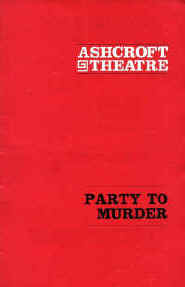
"Party to Murder"
It has not been possible to verify when and where Party to Murder, a two-act
whodunnit thriller about the murder of a university professor's wife written by Olive
Chase and the Burke sisters under their new "Stewart Burke" byline, made its
stage debut, although one source suggests it may have been in Hull, Yorkshire as early as
1970. However, it was more likely to have been first performed on stage at the Theatre
Royal in Windsor during October and November of 1971. The director was Joan Riley and the
lead roles were played by Helen Cherry and David Knight. In late September of 1973, The
Ashcroft Theatre at Fairfield Halls in Croydon was the venue for another performance of
this play. Among the cast of actors were Ty Hardin, Ros Drinkwater and Patricia Driscoll.
The director was Kim Grant and a souvenir programme was available at the event to
attending theatregoers. The same production of Party to Murder ran for two weeks
at the Richmond Theatre in Surrey, with the first performance given on October 1, 1973. A
review of the show was printed four days later in The Middlesex Chronicle. A book
of the play was published by Samuel French in 1974. A year later the play was performed
again on stage at the Theatre Royal in Nottingham, where it ran for one week at the
beginning of May 1975. This production was directed by Peter Adamson, who also starred in
the lead role and was known for playing Len Fairclough in the television soap opera Coronation
Street. This touring show was also performed for one week from May 12, 1975 at the
Alexandra Theatre in Birmingham. The same production then ran at the Gateway Theatre in
Chester, Cheshire for two weeks. The Woodford Wells Dramatic Society performed Party
to Murder at the United Reformed Church Hall in Buckhurst Hill, Essex for three
nights beginning on November 25, 1976. It ran more or less concurrently at another venue,
the Stanford Hall Theatre near Loughborough in Nottinghamshire, with the show's performers
made up of members of the Loughborough Festival Players. The lead roles were played by
Louis Stanford and Pamela Ryde-Rogers. A typically favourable review of this production
appeared in the local press, wherein there was praise for the clever twists of the plot
and how this murder mystery "kept everyone in the audience guessing right up to the
final moments of the play." In October 1977, Party to Murder returned to
Chester area for a three night run at the nearby Civic Hall in Neston. Performed this time
by the Neston Players, the show was sponsored by the local Rotary Club, with proceeds from
the opening night going to the Prince Charles Silver Jubilee Fund. A year later to the
month, Peter Dutton directed another production of the play for a three night run in
Chester itself, the venue this time being the Old Palace Theatre Club at the city's
Y.M.C.A. In March 1979, the New Theatre Players staged an excellent performance of the
play for five nights at the Concordia Theatre in Hinckley, Leicestershire. Produced and
directed by Keith Pratt, a very positive review appeared in The Hinckley Times
newspaper, praising the writing itself and the actors. Professor Stephen Brent and his
wife were on this occasion played by David and Jean Crozier, a married couple in real
life. The Princeville Methodist Church Hall in Bradford, West Yorkshire saw Party to
Murder performed for three nights in May 1979 by the Princeville Players. As you can
see from the above, the play enjoyed a prolific stage life in the 1970s. It is worth
noting here also that in a number of newspaper reviews throughout this decade, Party
to Murder was at times referred to as a "comedy thriller". As well as the
cerebral aspect of a mystery to be solved, the play clearly raised some laughs from
theatregoers! In early February of 1980, the Rugby Theatre in Warwickshire was the venue
for another peformance of Party to Murder which took place across several nights.
A rather lukewarm review in The Coventry Evening Telegraph that was printed after
the opening night was critical of the actors who took part, rather than the play itself.
Marjorie Wadsworth directed the Poynton Players in the next production of the play which
was staged in April 1981 and performed in the local amateur dramatic society's own theatre
in the village of Poynton, Cheshire. Among the cast was Marjorie Ward who brilliantly
played two characters, those of the cousins Norma and Diane. A four night run of the play
at The Memorial Hall in the town of Ponteland, Northumberland took place in November 1981.
Brenda Carss was the director and the cast comprised members of the Ponteland Repertory
Society. In May 1984, the Woodley Players performed the play for five nights at the
Playhouse in Berkshire. The show was directed by Chris Winter-Goodwin. The Thurton
Players, a now-defunct amateur dramatics society that was based near Norwich, performed Party
to Murder for three days in May 1985. The show, presumably staged at a modest venue
such as a village hall, was directed by Ray Wharton. The following month saw the play
performed in the West Midlands for three nights by members of St. Andrew's Dramatic
Society at St. Andrew's Hall in Walsall. The Theatre Workshop for Youth, based in Sutton,
South London presented their performance of the play at their own venue in February 1986.
Directed by David Rundle, the show recieved a rather lukewarm review in The Croydon
Advertiser. For three consecutive evenings starting from October 30, 1986, the
Willingham Amateur Music and Dramatic Society, with Tony Horton as the director, performed
Party to Murder at the Willingham Church Hall in Cambridgeshire. February 1987
saw the village of Dibden Purlieu in Hampshire entertained by Petra Daniels' new
production of the play which was performed at the local W.I. Hall and ran for three
nights. The Little Theatre Company performed the play for several nights in June 1987 at
their own theatre in Rhyl, Denbighshire in Wales. Directed by Kay Helmsley, two of the
leading parts were played by Andrew Jones and Sue Bamsey. A four night run of the play,
directed by Ray Allan, was performed by the Barby Players in February 1988 at their local
village hall in Barby, Northamptonshire. The Parish Hall in Water Orton, Warwickshire,
provided the stage for a production of Party to Murder by the local theatre group
Water Orton Company of the Curtain. This show, directed by Faith Jerromes, ran from
January 31 to February 4, 1989. Six months later, the play, billed as a "Vortex
production", was performed for four evenings in early August at the Kenneth More
Theatre in Ilford, Essex. The character of Norma Brent was portrayed by Frances Chanter
and the show was directed by Paul Alvarez. October 1995 saw the Chelmsford Moulsham Lodge
Dramatic Society provide the next production of this play, which they performed at a venue
in Chelmsford, Essex. The Oast House Theatre in Rainham, Kent, was the venue for a
production of Party to Murder that took place across two evenings in early
September 1997. The performance was given by the Rainham Amateur Theatrical Society. In
March 1998 the play enjoyed a week's run at St. Peter's Church Hall in Watford,
Hertfordshire, with the show performed by the local theatre group St. Peter's Players.
Heatons United Reformed Church, situated in a suburb of Stockport, Cheshire, was the
venue at which the Heaton Moor Guild Players performed the play for three nights in March
1999. To the best of my knowledge, this was the most recent stage performance of Party
to Murder. I was pleased to learn that this play lived on for many years in so many
productions and was still doing the rounds of theatres almost three decades later!
"Key to Murder"
In 1978, this play was published under the "Stewart Burke" pseudonym in book
form by Samuel French, who represented the Burke sisters in handling all queries
concerning performance and adaptation rights to their work. The setting and premise of Key
to Murder is a tense meeting in a flat among a television production crew. The story
revolves around Maggy Fairchild, a well known actress who is about to appear in a new
series. A stage production of Key to Murder took place across three consecutive
evenings at a venue in Arbroath, Scotland during September 1980. In April 1982, the
Esplanade Pavilion at Ryde on the Isle of Wight provided the stage for a four night run of
the play, with the performers made up of members of the Bellevue Players. The Playgoers
Dramatic Society performed Key to Murder across three evenings during March 1984
to audiences at the Amersham Community Centre in Buckinghamshire. The Civic Theatre in
Ayr, Strathclyde in Scotland was the venue for a new production of the play presented by
the Graham Players. It ran for a week in August 1987.
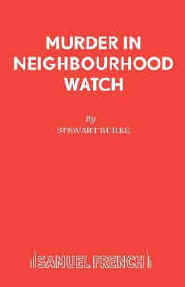
"Murder in Neighbourhood Watch"
In 1990, this play, a thriller, was published under the "Stewart Burke"
pseudonym in book form by Samuel French. Murder in Neighbourhood Watch begins
with the tragic death of Marion Ellis, a young woman new to the Green Belt village of West
Lynstead who is raped and murdered in a nearby woodland. Several residents of the area
have their suspicions as to who the murderer is, with the headmaster of the local school,
Andrew Wingate, considered a suspect. However, taking the law into his own hands, Wingate
claims to know who the murderer is but has no proof, and spends his evenings in the woods
disguised as a woman, hoping to catch the killer. The Bridgewater Players presented a
three-night run of this play which they performed on stage at the Thelwall Parish Hall in
Cheshire during April 1994. For three consecutive evenings during the following month a
stage production of this murder mystery was performed by the Alderbury Players in the
village hall of Alderbury, Wiltshire. The show's directors were Gwyneth Doran and David
Hammetts. The Bletchingly Amateur Dramatic Society performed the play in March 1995 at
their local village hall, with John Dresser playing the part of the headmaster. A village
hall in Warwickshire saw the Wellesbourne Amateur Dramatic Society perform Murder in
Neighborhood Watch for three nights in November 1997. Among the cast were Simon
Harrison and John Tompkins. The play was performed again on stage for several nights in
June 2001 at the Thornbury Centre in Bradford. The actors on this occasion were members of
St. Margaret's Players. The most recent stage production of this play would appear to be
one that was performed from October to November 2019 in the Great Hall Theatre at the
Assembly House in Norwich, Norfolk. The part of Ann Wingate, the wife of the headmaster,
was played by Marie Cooper. I was glad to discover that the Burke sisters' work has been
performed on stage as recently as this. One wonders how many people involved in this
production knew who was behind the Stewart Burke byline.
Sources and Acknowledgments:
In the process of compiling this bibliography, as well as referring to my own
collection of literature and the research I have done at the British Library Newspaper
Library, a number of online sources were consulted, not the least of which was Philip
Stephensen-Payne's Galactic Central
website, the home of William G. Contento's Fictionmags Index.
Addenda:
Please note that in the Short Stories
section of this webpage, The Evening News refers to the London evening newspaper
that ran from 1881 to 1980.
It is also worth mentioning that I am aware, from my own research at The British Library
Newspaper Library, that Leone Stewart had several of her short stories printed in the
magazines Tit-Bits and Weekend. The proprietors of the latter
publication were Associated Newspapers, who also owned The Evening News.
Unfortunately, at the time I did not make a note of the story titles, or the issues in
which they appeared, as I was busy focusing on other authors and projects.
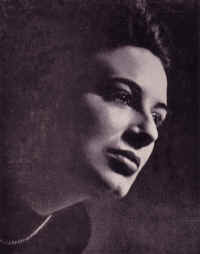
Leone Stewart is the pen name of Elaine Irene Burke, who was born in Brentford, Middlesex,
in 1920. For those interested in learning more about Leone Stewart's life and career, a
short biographical sketch I wrote for her can be read here.
Her short stories are a delight to read and, reflecting her own interest in the judicial
system and penology, sometimes feature escaped convicts. These tales are usually light in
tone and feature a neat little plot twist at the end of the story. As Stewart kept dogs as
pets, it is unsurprising that they appear in several of her stories. Included in these are
"Postman's Shock", "Into Thin Air" and "Canny Nell". The
latter tale is about a faithful and highly intelligent collie that belongs to a sheep
farmer. It is one of a series of stories set in the Welsh Valleys, in which an old
resident, Taffy Morgan, relates interesting anecdotes about the area over a glass of ale
in the local public house. Another recurring location for her short stories is the
fictional village of West Lynstead and the countryside around it. Presumably these tales
are meant to be situated in either Berkshire or Surrey, counties that would have been very
familiar to Stewart, having lived in the area all her life. West Lynstead is also given as
the setting for the play Murder in Neighbourhood Watch, which she wrote with
Aileen Burke. However, in at least one stage production of this thriller, West Lynstead is
said to be near Worthing in West Sussex! But then, what of it? Fictional towns can be
wherever the original author or playwright wishes them to be, as indeed is the case with
another who is adapting the source material to suit their requirements.
While there is every possibility that Leone Stewart had other nonfiction pieces published
elsewhere, the only article I have been able to identify by her so far is "Murder is
a Cure for Love", a true story that she apparently wrote with her older sister,
Aileen Burke, who also penned short stories and collaborated with Stewart in the writing
of numerous plays. It was published, so it would seem, under their joint "Stewart
Burke" pseudonym in the November 1941 issue of the American magazine Sensation.
However, to my mind, at least, there is a huge question mark regarding whether this piece
was by the Burke sisters or someone else writing under that name. That such an early
article should appear in an American magazine gives me some doubt as to its true
authorship.
It would appear that Leone Stewart and Aileen Burke made their first foray into the
writing of film scripts in 1947. The actor and producer Arthur Dent, who founded Adelphi
Films, had plans to make a movie about Shakespeare's life and decided to hire their
services as screen writers for the project. Indeed, the sisters visited Stratford-on-Avon
in search of material for this venture. However, Dent's project was almost certainly never
made, as I can find no references to this film anywhere online. In 1948, Leone Stewart and
Aileen Burke finally did see one of their screenplays make it into the cinemas in the form
of the feature film Bless 'Em All, a musical comedy directed by Robert Jordan
Hill and starring Hal Monty and Max Bygraves. The film's script was, so I am given to
understand, partly the work of Arthur Dent, who also produced the film and used the Burke
sisters' expertise as writers to flesh out the narrative. Given their prolific career as
playwrights, both for stage and radio, and their previous association with Dent, their
contribution in the writing of the script was, no doubt, all important to the movie's
success. They were also given writing credits, alongside the actor Hal Monty, who supplied
additional dialogue and ideas, for the screenplay of Skimpy in the Navy,
a slapstick comedy released in cinemas the following year. Directed by Stafford Dickens,
this movie also starred Hal Monty and Max Bygraves. In 1962, it was announced in the press
that Stewart had written the script for a film called Black Saturday and that it
was being shot in Germany. However, I have been unsuccessful in finding out any more
details about this project, or whether it went on to be released in cinemas or shown on
television. Stewart and Burke's third and final big screen credit was for writing the
screenplay of the 1963 feature film Farewell Performance, a murder mystery
directed by Robert Tronson. Additional dialogue was written by James O'Connolly, who
produced the film. The two leading roles in the movie were played by David Kernan and
Delphi Lawrence, with a supporting cast that included Alfred Burke, a versatile actor who
went on to play Frank Marker in the TV series Public Eye. The interior scenes
were filmed at Pinewood Studios. Amusingly, advertisements in the press for Farewell
Performance gave the impression that the film's starring roles were played by Aileen
Burke and Leone Stewart. Both had acted in the past, in fringe theatres and while on tour
with E.N.S.A. during the war, but unless I have got this horribly wrong, they did not
appear on screen (bit parts under aliases, perhaps?) in Farewell Performance!
As you can see from the list of plays above, the Burke sisters were also prolific writers
for the stage and radio, their stories ranging from comedies to murder mysteries. I have
tracked down as many as I could find, but I believe my list of plays is incomplete. For
example, I have seen references to Leone Stewart having her stories made for television,
but have been unable find out any details on this. It could be that she wrote plays
especially for this medium, or perhaps her short stories were adapted into one-off plays,
a format that was very popular on British television during the 1960s and 70s, with long
running shows such as Armchair Theatre on ITV and the BBC's Play for Today.
Although many writers typically keep themselves to themselves, Leone Stewart and Aileen
Burke were outgoing and social. They enjoyed mixing with theatrical groups and involved
themselves in literary circles, encouraging budding authors and on one occasion,
volunteering to stand as judges of a literary competition. Very little is known about the
private lives of Leone Stewart and Aileen Burke. They were said to be happy being single
and unmarried when they were sharing a flat in Sunbury-on-Thames in the early 1960s. It is
obvious that both directed much of their energy to writing and theatrical work. There is
strong evidence to suggest that Leone Stewart got married in 1967 to an Alan S. Ward, but
further details are unknown to me at the time of writing.
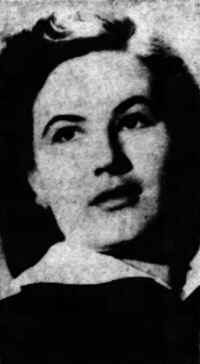
Aileen Burke (1914-1992)
As mentioned above, Aileen Burke sold a number of her short stories to periodicals, seeing her work published in The Evening News, Reveille and Home Notes. I suspect Aileen Burke's short fiction appeared in other newspapers and magazines, particularly as so many have not yet been indexed online or uploaded to The British Newspaper Archive and Newspapers.com. Please see the list below of those stories that I have been able to track down. Along with her sister, Aileen Burke was a member of the Crime Writers' Association and several of her short stories are murder mysteries. Again, they also had in common an ability to pen humorous tales that were often romances; what some might term "light fiction". The writing careers of Aileen Burke and Leone Stewart were inevitably intertwined as they wrote so many stage and radio plays together, along with screenplays. It is interesting to read the short stories they both wrote individually and notice the differences in style. By listing Aileen Burke's short fiction at the end of this bibliography for Leone Stewart, I wish to note that it is not intended as an afterthought. Aileen Burke had a literary voice of her own, although as I have have stressed, their interwoven careers inevitably lead to one thinking of these sibling writers as very much linked. Indeed, for some years they shared a flat together, along with a little black dog called Linda (dogs feature often in their short stories), in Sunbury-on-Thames, while writing their numerous plays. It is possible that at some point I may well create a separate webpage bibliography for Aileen Burke, especially if I am able to discover more about her. I have come across a few references to Burke having written feature articles for periodicals. Having been unable to identify any of these so far, my guess is these may have been written under a pseudonym. It has also been mentioned that she was a novelist. However, it is certain that if she ever did have one of her thriller novels published, it must have been under a pen name. I also found a mention of a book she had written in the early 1960s about "the funny side of authorship". I do not know if this ever saw publication but, as with any thriller novels she wrote, I can find no record of it in the British Library Public Catalogue, or anywhere else online. In the same period, Burke was quoted as saying that, up to that point, she "hadn't had any time to think about marriage". If anyone reading this has information to share about the writing career and life of Aileen Burke, I would be very interested to hear from them.
Short Stories by Aileen Burke
"Pay Cash"
Reveille, March 14—16, 1952
"Grave Error"
Reveille, February 6—8, 1953
"Secret Garden"
Reveille, April 3—5, 1953
"One Brick Too Many"
Reveille, October 4, 1955
"The Awakening Heart"
Home Notes, July 26, 1956
"Home with the Milk"
The Sunday Standard (Singapore), January 20, 1957
This is almost certainly a reprint of a short story that had previously appeared in a
British periodical. The original publication details are unknown to me at the time of
writing.
"Farewell Performance"
The Evening News, September 29, 1961 (the fifth in a series of detective and
thriller short stories that were specially written for The Evening News by
members of the Crime Writers' Association)
The Manchester Evening News, September 29, 1961 (this short story was printed here
without a title as such, but rather under the following mock headline: "Mystery of a
Pop Star's Last Performance")
The Liverpool Echo, October 10, 1961
Interestingly, this tale shares the same title as a 1963 feature film for which Aileen
Burke and Leone Stewart provided the script. Having read this short story, which is a
murder mystery set within a theatre that involves the poisoning of a singer who was
something an idol to his adoring, teenage fans, it has been easy for me to conclude that
Burke's yarn must have served as an inspiration for the movie's premise, which is
strikingly similar. The film Farewell Performance has a plot that contains the
same murder method and the victim is also a popular, handsome male singer.
"Money in Her Pocket"
The Evening News, February 14, 1963
The Birmingham Evening Mail, June 1, 1967
"Just Drop In"
The Evening News, June 3, 1963
The Birmingham Evening Mail, December 9, 1967
"Copy Catch"
The Evening News, September 6, 1963
"A Dog and His Duty"
The Evening News, October 5, 1963
The Birmingham Evening Mail, April 30, 1968
The Birmingham Evening Mail, June 24, 1968
"Any to Come"
The Evening News, January 25, 1964
"Woman on the Line"
The Evening News, February 29, 1964
"Medal for Shep"
The Evening News, April 21, 1964
"The Pet-Lovers"
The Evening News, July 23, 1964
"Homing Dog"
The Evening News, October 3, 1964
"Let the Dog See the Rabbit"
The Evening News, December 4, 1964
"Dog on His Hands"
The Evening News, March 13, 1965
"Warned Off"
The Evening News, May 31, 1965
The Birmingham Evening Mail, April 14, 1967
"No Angel He"
The Evening News, July 9, 1965
The Birmingham Evening Mail, April 3, 1967 (this short story was reprinted here
under the title "No Angel ...")
"The Soft Touch"
The Evening News, August 10, 1965
"Face Value"
The Australian Women's Weekly, September 22, 1965
This is almost certainly a reprint of a short story that had previously appeared in a
British periodical. The original publication details are unknown to me at the time of
writing.
"Time to Be Silent"
The Evening News, November 26, 1965
The Birmingham Evening Mail, April 7, 1967
"Wishing Stone"
The Evening News, April 22, 1966
The Birmingham Evening Mail, April 18, 1967
"Ghost on Rail"
The Evening News, June 6, 1966
"Dog's Chance"
The Evening News, September 3, 1966
The Birmingham Evening Mail, April 26, 1967
"Method in Her Manner"
The Evening News, July 1, 1967
The Birmingham Evening Mail, September 21, 1967
The Manchester Evening News, April 22, 1969 (this short story was reprinted here
under the title "There Was Method in Her Manner")
"Not a Betting Man"
The Evening News, October 2, 1967
The Birmingham Evening Mail, September 24, 1969
"Guide Line"
The Evening News, August 12, 1968
"You're Being Followed"
The Evening News, June 20, 1969
"Certain Alibi"
The Evening News, August 25, 1969
"Old Ali"
The Evening News, February 9, 1970
"Haunting Dog"
The Evening News, July 31, 1970
"Message from the Mountain"
The Evening News, May 14, 1971
"Shake Hands"
The Evening News, October 20, 1971
"Future Date"
The Evening News, November 9, 1971
"Burglar Alarm"
The Evening News, March 4, 1972
"Fool's Mate"
The Evening News, September 6, 1972
"Witch Hunt"
The Evening News, January 8, 1973
"Chain Reaction"
The Evening News, May 12, 1973
"Photo Catch"
The Evening News, October 31, 1973
"Braces Man"
The Evening News, February 12, 1974
"Casting Vote"
The Evening News, May 22, 1974
Email: marks3789@gmail.com
Copyright © 2026 Richard Simms