JOAN HAZELDINE
A BIBLIOGRAPHY
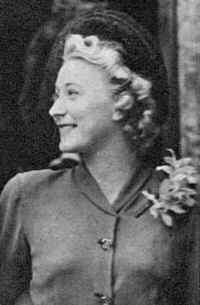
Joan Hazeldine (1918-1994)
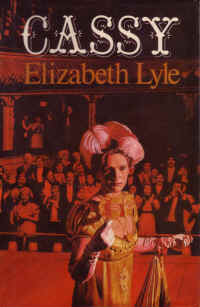
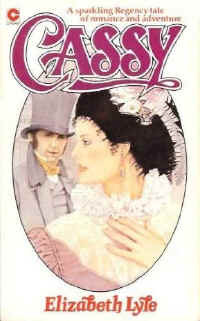
Cassy
Published by Michael Joseph, 1981
This novel originally appeared as a serial, under the pseudonym Elizabeth Lyle, in the
weekly magazine Woman's Realm. The first instalment was published in a January
1981 edition of that periodical. I have been unable to ascertain the issue dates of the
further instalments, nor how long the serialisation ran in Woman's Realm. In the
same year, Michael Joseph published Cassy in book form as a hardcover while the
New York based publisher, St. Martin's Press, brought out an American edition. The novel
was reprinted again in the U.K. as a paperback by Hodder & Stoughton in 1982. Cassy
is a Regency romance story set in 1813. Lucasta Loring, known as Cassy, is one of three
sisters who are left penniless after their parents die in an accident. Their father had
squandered all his wealth in gambling debts. The handsome Marquis of Allingham has set his
eyes on Cassy but she has an independent streak and becomes an actress, changing her
appearance and adopting a stage name for her performances in London theatres. While
pursuing a successful stage career, Cassy lets her sisters believe that while she is away
she is teaching at a school for young ladies. A double life ensues, in which she meets
many notable people in London and Brighton. Fearing her secret will be discovered, Cassy
travels abroad. Her adventures take Cassy to Paris, Vienna and Brussels. This is an
outstanding first novel by Hazeldine which was well received by critics upon its
publication.
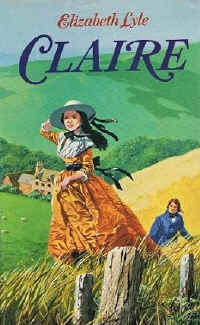
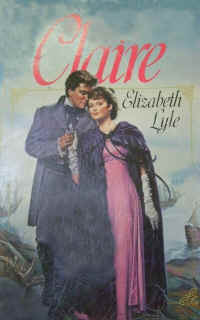
Claire
Published by André Deutsch, 1983
This novel was reprinted as a hardcover in the U.S.A. by St. Martin's Press in 1983. The
same publisher issued a paperback edition of it in 1987. Joan Hazeldine drew on her local
knowledge when writing Claire, which is set on the East Sussex coastline in the
late eighteenth century, shortly after the Revolution in France. Brighton, Rottingdean,
Saltdean, Newhaven and the cliffs and beaches of the area are the settings for this tale
of adventure and romance. Claire de la Robinière is a French emigrant who travels from
Dieppe in a fishing boat to Newhaven, her family having lost almost everything. A
beautiful young woman, Claire finds herself a centre of attention in the Prince Regent's
Brighton. Nevertheless, she carries a secret. With the local aristocracy, eligible
suitors, the Preventive and smugglers involved in the plot, Claire is a
marvellous work of historical fiction. Although it in no way detracts from one's enjoyment
of this novel, the time period in which it is set, as one literary critic pointed out, is
a little too early to be a true Regency novel. But to my mind, it's close enough and a joy
to read as Hazeldine strikes a happy balance between historical detail and an enthralling
story.
"The Violin"
The Star, July 13, 1946 (as by Joan Curtis-Willson)
"The Eight O'Clock Girl"
The Star, August 3, 1946 (as by Joan Curtis-Willson)
"The Last Kiss"
The Star, September 28, 1946 (as by Joan Curtis-Willson)
"The Melody of Romance"
The Star, April 24, 1947 (as by Joan Curtis-Willson)
"Girl in a Yellow Swimsuit"
The Star, August 2, 1948
"Primrose and Her Paragon"
The Star, October 16, 1948
"Listening for Love"
The Bristol Evening Post, April 30, 1949
"Portrait of Carol"
The Star, June 18, 1949
"Present from Santa"
The Star, December 24, 1949
"Joy's Easter Bonnet
The Star, April 8, 1950
"Laura Goes Home"
The Star, May 27, 1950
"Holiday for June"
The Star, June 24, 1950
The Bristol Evening Post, September 8, 1951
"Date with Daphne"
The Star, September 9, 1950
"Dawn for Greta"
The Star, November 18, 1950
"The Love Slogan"
The Star, January 27, 1951
The Bristol Evening Post, September 22, 1951
"The Paying Guest"
The Star, September 1, 1951
"Girl on the South Bank"
The Star, September 20, 1951
"Portrait of Marriage"
The Star, February 16, 1952
"Mona Lisa's Suitor"
The Star, April 12, 1952
"Angel Face"
The Star, August 23, 1952
"Betty and the Bumpkin"
The Star, October 18, 1952
"Christmas at Clare's"
The Star, December 20, 1952
"Cupid Catches the Bus"
The Star, March 28, 1953
"His Music for Maureen"
The Star, July 11, 1953
"Pink Shoes"
The Star, August 3, 1953
"Wife for Joey"
The Star, November 21, 1953
"Farewell to a Ballerina"
The Star, July 17, 1954
"Pam's Producer"
The Star, November 27, 1954
"The Bird for Basil"
The Star, May 7, 1955
"Bunch of Red Roses"
The Star, July 2, 1955
"Julie in Town"
The Star, July 16, 1955
"Bobby's Present"
The Star, December 1, 1956
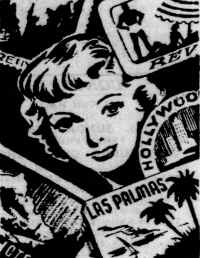
Illustration in The Bristol Evening Post for the story "Holiday for
June".
Sources and Acknowledgments:
In the process of compiling this bibliography, as well as referring to my own
collection of literature and the research I have done at the British Library Newspaper
Library, I also consulted the Newspapers.com
website and the online British
Newspaper Archive. In particular, I have used as a source of information an
article about Joan Hazeldine written by journalist Mary Kenny that was published in the
April 26, 1981 edition of The Sunday Telegraph.
Addenda:
I first discovered Joan Hazeldine's delightful short stories in 2006, while
researching the fiction published in the London evening newspaper The Star at the
British Library Newspaper Library in Colindale, North London. Back then, I felt the name
did not sound like a pseudonym and I tried to trace any details of the author's life.
However, I drew a complete blank. Now, twenty years later, I have been able to learn a lot
about her and I am pleased to share what I know here.
My knowledge of Joan Hazeldine's writing is limited to her novels and short stories. She
was said to have also written humorous articles under her own name. At the time of
writing, I have yet to come across any articles by her in magazines and newspapers. I
suspect these were published during the post-war period in women's magazines; quite
possibly some of them may have appeared in Woman's Journal, for which publication
she was once employed as a journalist.
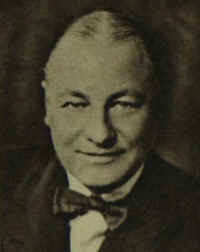
Arthur Leslie Cranfield (1891-1957)
Joan Maureen Cranfield was born in Crowborough, East Sussex on February 9,
1918. Her father was the well known journalist Arthur Leslie Cranfield. The son of a
solicitor, he was born in St Ives, Huntingdonshire in 1891 and fought in the First World
War with the Essex Regiment as a captain and brigade signalling officer. In January 1916,
he married Mary Frances (née Smyth) in Hammersmith, London. Born in the same year as her
father, Joan Cranfield's mother was the daughter of the Irish sculptor George Smyth
(1859-1927). A huge figure in the newspaper world, A. L. Cranfield's first job was with The
Warwick Advertiser. He went on work for The Sheffield Telegraph and The
Birmingham Gazette, in addition to two spells with The Star that were
interrupted by his service in the First World War. In 1922, A. L. Cranfield was appointed
as chief sub-editor of The Evening News and in 1926 became the editor-in-chief of
the Press Association. His later career in Fleet Street encompassed editorial and
executive roles at The Daily Mail and The Evening Standard before his
sixteen-year tenure as editor of The Star, which began in 1941. Joan Cranfield
was the oldest of their two children. Her younger brother, Leslie Cranfield, was born in
1921 and became a barrister. Both had a Catholic upbringing, and in her youth, Joan
Cranfield lived in Rottingdean, near Brighton in East Sussex and the Kensington area of
West London, where her parents had a second home. As a young woman, she served in the
Second World War as a public relations officer for the South-East Command division of the
A.T.S. In August 1943, she was transferred to the Northern Command of the A.T.S. at York,
where she held a similar role.
Joan Cranfield married Captain Clifford Leslie Curtis-Willson, who was born in Hackney,
East London and had played rugby for Sussex, on March 25, 1944, their wedding taking place
at the Catholic Church of St. James in Marylebone, Central London. Her husband had
attended Brighton College before the war and while there he edited a magazine. I suspect
their shared passion for writing was one of the things that brought them together. Both
came from journalistic backgrounds, for his father, William Thomas Curtis-Willson
(1888-1957), a First World War veteran, was later a journalist who served as president of
the Newspaper Society and ran The Brighton and Hove Herald newspaper in his
capacity as chairman and managing director. His son fought in the Second World War and was
a pilot in the air observation post squadron of the Royal Artillery. He served his country
with the RAF's 660 Squadron and was sent to France after the Normandy landings in 1944. On
the morning of March 12, 1945, Captain Clifford Leslie Curtis-Willson died from his wounds
after the aerial reconnaissance plane he was piloting was shot down the previous day by an
enemy fighter plane on the Western Front near Bedburg in Germany. He was buried at the
Groesbeek Canadian War Cemetery in the Netherlands.
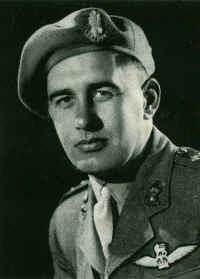
Captain Clifford Leslie Curtis-Willson (1918-1945)
Joan Curtis-Willson remained a widow for two years. During this period,
her short stories began appearing in The Star. After the war, she found a job as
a sub-editor for the monthly periodical Woman's Journal, which was owned by the
Amalgamated Press. Joan Curtis-Willson would have been working under the magazine's
editor, Dorothy M. Sutherland, at the company's headquarters in Fleetway House on
Farringdon Street in the City of London. She later had careers in advertising and film
publicity. In June 1947, she married her second husband, Roy Edward Hazeldine, who had
served as a tank officer with the Royal Gloucester Hussars. Their wedding took place in
Brighton. The couple settled in Rottingdean and had three children together, two sons and
a daughter. Roy Hazeldine's father was Thomas Frederick Hazeldine, who ran the White Horse
Hotel in Rottingdean. Born in 1922, Roy was a local businessman who worked in the car
industry. He and his older brother, Eric Hazeldine, founded Denes Motors in 1950, a garage
business based in Telscombe Cliffs and Saltdean. They designed the renowned Hazelcar, an
open-top motor vehicle that went through various models, both electric and petrol-powered.
After his brother emigrated to Canada in 1952, Roy Hazeldine persevered with his business
ventures, owning premises in Hove and Peacehaven. Joan Hazeldine continued to contribute
her beautifully written short stories to The Star and The Bristol Evening
Post in this period, all of them under her new married name. Her short fiction
certainly has merit, as I have enjoyed reading Hazeldine's stories very much. However,
with her father, A. L. Cranfield, at the helm of The Star, undoubtedly this fact
provided a stepping stone, of sorts, to her writings finding their way into the pages of
the newspaper. "The Love Slogan" (1951), a romantic tale about a young woman who
is employed by an advertising agency, is of particular interest. The level of detail that
Joan Hazeldine put into this story about the world of advertising clearly reflects the
fact that she once worked in this industry. After 1956, it appears she stopped writing
short stories altogether and concentrated on being a housewife and bringing up three young
children. Her mother, Mary Frances Cranfield, had died after a long illness at a nursing
home in Hove on April 15, 1955. Hazeldine's father had also been in ill health for some
time and retired from The Star in July 1957. He passed away later that year at
the London Clinic on October 9. A memorial service for Arthur Leslie Cranfield was held
three weeks later at St. Dunstan-in-the-West on Fleet Street. The lesson was read by
Laurence John Cadbury, who was chairman of The Daily News Ltd., which owned The Star
and News Chronicle. Lord Layton, Sir William Haley and many other journalists
from across the newspaper world were in attendance, along with Cranfield's relatives
Five years later, the family was dealt another blow when Joan Hazeldine's brother, Leslie
Cranfield, who was married with two children and had retired from the bar over a year
earlier to join the legal department of the British Oxygen Corporation, died at the age of
40 in tragic circumstances on September 4, 1962. On the way to his office during the
morning rush hour, he fell under a District Line train at Stamford Brook station, near
where he lived in Chiswick. A 23-year-old student doctor, the former Olympic skier Mrs.
Juliet Gardner, who was on her way to Guy's Hospital and off-duty at the time, ordered an
ambulance before she climbed down from the platform and crawled under the second carriage
of the train, where she administered first-aid and gave him a morphine injection.
Eventually, with the help of firemen, he was lifted off the tracks. Gardner went with him
in the ambulance but he died on the way to Hammersmith Hospital. At an inquest into his
death, eyewitness accounts from those that witnessed the incident at the London
Underground station suggested he had deliberately threw himself off the station platform
into the path of the oncoming train. Leslie Cranfield had been receiving a war disability
pension for gunshot and shrapnel wounds and his doctor confirmed that he had been
suffering from anxiety and insomnia. Almost certainly what Leslie Cranfield saw and
experienced in the Second World War would have had a profound affect on him. He may well
have been suffering from PTSD. However, his wife and doctor both stated at the inquest
that he was happily married, had no financial worries and there was no prior indication to
them that he wanted to take his own life. The coroner found there was insufficient
evidence to show that he had committed suicide and recorded an open verdict.
Despite these personal losses, it is evident that Joan Hazeldine got on with raising a
family and had a good social life. Around 1966, at the age of 48, she was said to be
content with her life in the Brighton area, a stalwart member of East Brighton Golf Club,
as her father had been, and a frequent attendee of the local bridge circuit. At this
point, however, Roy Hazeldine's work for British Leyland took him to a remote part of
Turkey, near Izmir on the Aegean Coast. The couple ended up living there for 14 years. It
took her some time to acclimatise, dealing with a culture shock and a different way of
living, without the usual mod cons, for example. Her husband's posting abroad was, it
seemed to her, a final throwback to the days of the British Raj, when a gentleman would go
where his government or company would tell him to go, and the uncomplaining wife, at least
in public, would accompany him. Once settled in her new environment, she flourished,
learning to speak Turkish, Italian and German, as well as visiting the Edwardian libraries
of expatriates who had previously lived in Turkey. Her love of literature had always been
there, but now Hazeldine decided to write novels. She wrote four, three of them Regency
romances and the fourth, a love story set in medieval Turkey.
Joan Hazeldine and her husband came back to England in 1980, and by 1981 were enjoying their retirement in Andorra, fairly high up in the Pyrenees. During this period, and well into her sixties at this point, she took to driving Land Rovers across Europe on her own. She clearly had an adventurous spirit at this time of her life. It was while living in Andorra that her novel Cassy was serialised in Woman's Realm under the pen name Elizabeth Lyle, with the first instalment appearing in that magazine in January 1981. Cassy appeared shortly thereafter in book form, as a hardcover by the publisher Michael Joseph, with a U.S. reprint edition being an indication of the novel's success. A second Regency romance novel, Claire, was published by André Deutsch in 1983. Claire also found its way onto the shelves of American bookstores, in both hardcover and paperback editions. It does seem a shame to me that her other two historical romance novels never saw publication. Given the quality of the two that did get published, I imagine they were equally accomplished literary works. I would have loved to have read them.
It is unclear when exactly Joan and Roy Hazeldine returned to Rottingdean after their time in Andorra. They were certainly still living halfway up a mountain in the Pyrenees in 1983. Eventually, they settled back in Rottingdean for good. Joan Maureen Hazeldine passed away, aged 76, at her home in Rottingdean on December 13, 1994. A Requiem Mass was held for her at the Church of Our Lady of Lourdes in Rottingdean, six days later. She was interred at St. Margaret's Churchyard, also in Rottingdean. Her husband, Roy, died in 1999. They are survived by their three children.
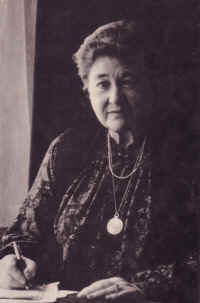
Joan Hazeldine in 1981.
Photo taken by her son, Nigel Hazeldine.
The above is, of course, a very brief sketch of her life. After being a mystery woman for so long, I can only repeat that it has been a pleasure for me to gain a little insight into who she was. And to take a fresh look at those early short stories she wrote for The Star, so charmingly written and deft they were in their composition. Joan Hazeldine's two published historical romance novels are also an inspiration. Entertaining, well researched tales that stand as a testament to her literary talent.
Email: marks3789@gmail.com
Copyright © 2026 Richard Simms