CHRISTINE JOPE-SLADE
A BIBLIOGRAPHY
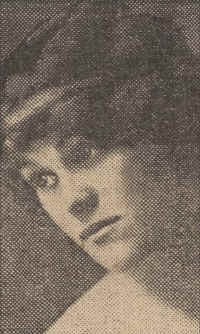
Christine Jope-Slade (1891-1942)
Novels | Short Fiction | Plays | Articles
The Bread and Butter Marriage
Published by Hodder & Stoughton, 1920
The Keys of Heaven
Published by Hodder & Stoughton, 1920
This novel originally appeared as a serial in the January, February, March and April 1919
issues of The Home Magazine.
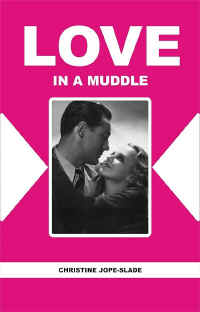
Love in a Muddle
Published by Hodder & Stoughton, 1920
The cover image above is taken from the 2024 Avarang Books edition. Love in a Muddle
is a contemporary romance—set in the period it was written, of
course—with a plot that focuses on Pamela Burbridge, a young woman with a overbearing
father who endeavours to find independence.
Monty's Girl
Published by Hodder & Stoughton, 1920
This novel originally appeared as a serial under the title "Which Was Monty's
Girl?" in the July and August 1919 issues of Ladies' Home Journal. Monty's
Girl has a cast of entertaining characters, all of whom are in one way or another
related or connected to either Monty or his girlfriend. The lovebirds have gone off to
America, leaving behind a state of confusion in a country house, as two young women and a
pair of eligible bachelors fall in love, while one of the men is entrusted to deliver a
ring to Monty's girlfriend and mistakenly believes one of the two women, who are staying
at the house, is her! The World's News in Sydney, Australia, had this to say:
"A really enjoyable little romance, which goes with a swing all the way
through."
Wedding Rings for Three
Published by Hodder & Stoughton, 1920
This novel originally appeared as a serial from July 5 to August 9, 1918 in
The Daily Sketch newspaper. Wedding Rings for Three is about a young
woman, Judy Ann Ambrose, who suddenly finds herself with £2,000—a fortune back in
those days! She uses her newly acquired funds in an effort to marry off her
none-too-well-off sisters. In order to achieve this end, Judy employs various devious
schemes, which included her having to pose as a war widow under a false name. A literary
critic in Australia, writing in Brisbane's The Daily Mail newspaper remarked that
Christine Jope-Slade's fifth novel was "brightly written and should find many
admirers".
The Money Grubbers
Published by Hodder & Stoughton, 1921
I believe this novel was first serialised during 1919 in the magazine Home Notes.
No further details are known to me at the time of writing.
The Cuckoo's Nest
Published by Nisbet, 1922
Described as a "glorious comedy" by the London Evening News, this novel
is about a beautiful girl, Zuriel Whistler, and her mother, Poppy, and what happens when
they spend the winter at the London town house of the Marchesa di Schundo. Taking leave of
suburbia and their existence among the bourgeoisie, Zuriel and her mother enter into the
bohemian life of London and meet some interesting characters. Among these are artists and
the nobility. With almost all of the people that enter their social orbit, the suburban
mother and daughter are inspired to give as good as they get in conversations and stay
true to themselves. The mystery of how Zuriel's father, Henry, makes a living also keeps
the reader interested, along with Jope-Slade's brilliantly realised characters and brisk
dialogue. A reviewer in The Daily Mirror remarked that Christine
Jope-Slade's "merry story certainly provides plenty of fun", while a critic in The
Star also gave The Cuckoo's Nest a thumbs up: "It kept me thoroughly
amused, and I enjoyed Miss Jope-Slade's whimsical wit." I should point out that by
1922, she had long since ceased to be a "Miss" and in real life was in fact Mrs.
Leslie Clark!
Silver Wings
Published by Hodder & Stoughton, 1923
The House of Broken Dreams
Published by Nisbet, 1924
This novel originally appeared as a serial in the September, October, November and
December 1923 issues of Ladies' Home Journal. It was also serialised in Woman's
Pictorial, with the first instalment published in the October 24, 1923 edition of
that magazine. The House of Broken Dreams is about a young Irish girl, Fannie
O'Rane, who shares a house in Soho with three rather strange elderly people. A review of
the novel, which appeared in The Woman's Leader and the Common Cause, commented
on how "the story is told in an imaginative and delicately mocking spirit",
while The Southwark and Bermondsey Recorder and South London Gazette had this to
say: "It is an extraordinarily fascinating story, and the characters, though some of
them may be grotesque, are lovable."
The Little Girl Who Kept Fairies
Published by Nisbet, 1924
Written for young children, The Little Girl Who Kept Fairies is an enchanting
story about Silvia and Jock, two youngsters who discover a secret room in which there are
a number of fairies who cannot find their way back to fairyland. The tale follows their
efforts to help them get back home, encountering various fantastical characters along the
way, such as Father Time and the North Wind. The illustrations for this children's book
were by Hilary M. Crosse.
The Madonna of the Clutching Hands
Published by Nisbet, 1927
Upon its publication, The Madonna of the Clutching Hands received a glowing
review in The Queen: "Christine Jope-Slade is a novelist of wit,
delightfully satirical, and with a peculiar gift for characterisation. She has given us a
novel that, besides being entertaining, with its flashes of brisk and amusing
conversation, has a tragic theme that is moving in its simplicity." Setting the early
chapters of her novel in the London of the 1890s, Jope-Slade featured within it some cameo
appearances of famous people, including Miss Ellen Terry, Lily Langtry, Edmund Yates and
Marie Corelli. A syndicated review that appeared in The Ballymena Observer in
Northern Ireland, and other newspapers, praised Christine Jope-Slade for "drawing a
brilliant picture of the sparkling social gatherings and artistic salons of the
nineties". The central character of this novel is Caroline Curtis, a wife and mother
who, while engendering sympathy in the reader, is something of an egotist. Glamorgan's Western
Mail considered The Madonna of the Clutching Hands to be "a subtle
character study" while commending the author for "sustaining the dramatic
interest". Christine Jope-Slade dedicated this novel to her friend and fellow writer
Silvia Thorn-Drury (1895-1972).
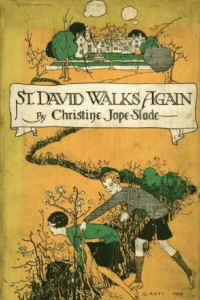
St. David Walks Again
Published by Nisbet, 1927
This children's novel originally appeared as a serial under the title "Saint David
Walks Again" in the July and August 1926 issues of Ladies' Home Journal. The
story of St. David Walks Again takes place in a Cornish village, where
two Anglo-American orphans come to stay. Their grandfather is a recluse who lives in a
castle, while the villagers feel that an evil spell has been cast over them. Described as
a "charming romance" and an "admirably told tale" by the Newcastle
Journal and North Star, St. David Walks Again is a marvellous story for
youngsters to read. The illustrations for this book were by Gladys Peto.
Life Is Such a Rush
Published by Cassell, 1931
This novel originally appeared as a serial in the March, April, May, June, July, August
and September 1931 issues of Modern Home. Life Is Such a Rush is about
an impatient husband, Nicholas Bevan, who works for a London publishing house, and his
more placid, loving wife, Lorraine, who is an author. The latter has the ability to soothe
her husband's volatility but, as the title of the book indicates, accepts that he will
always be the type of person to rush into things. Lorraine bears him a child, and proceeds
to navigate her way through married life and motherhood, with the scenes shifting from
London receptions to a country cottage and a trip to the United States. A literary critic
writing for The North Otago Times in New Zealand commented that Christine
Jope-Slade's novel could have been subtitled "The Story of a Marriage", before
going on to commend the book in glowing terms: "There is not a dull page in it. There
is plenty of fun, keen, brilliant dialogue, succinct portrayal of character, and
interesting backgrounds. And beneath all that there is something to think about." A
review of Life Is Such a Rush that appeared in the October 7, 1931 edition of The
Bystander was equally favourable, calling it "a remarkable study of two widely
differing personalities." The Bystander also included a lovely photo of
Christine Jope-Slade, which I have reproduced below:
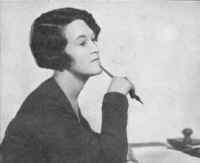
Christine Jope-Slade in 1931.
Ice Cold Marriage
Published by Cassell, 1932
Described by The Northern Whig and Belfast Post upon its publication as a
"well-written and consistently interesting story", this novel is about a cynical
young fashion model, Gay Clarke, who marries a twice-divorced, wealthy man on the basis
that it is, foremost, a business transaction. What follows is an insightful tale, largely
set in a London dress-making establishment, about a couple who come to accept that human
nature and their love for one another are things that cannot be ignored. Over the course
of the novel, the setting moves from London to Paris, while other scenes take place in
Vienna, Madeira and New York. A literary critic in The Bystander magazine gave it
a lukewarm review which, I feel, was more a reflection on his prejudices and personal
taste in literature. However, the reviewer went on to complement Christine Jope-Slade for
writing about the London social scene she obviously knew something about: "Maida
Vale, smart restaurants and night-clubs". By contrast, Scotland's The Montrose
Standard was effusive in its praise of Ice Cold Marriage, commending it as a
"clever, smart, vivaciously written modern novel ... the dialogue is lively and
snappy ... in the language of the picture house the novel can be described as capital
entertainment".
Britannia of Billingsgate
Published by Rich & Cowan 1933
This novel is based on a short
story by Christine Jope-Slade that she adapted into a stage play with Sewell
Stokes. The play was originally published in book form as Britannia of Billingsgate: A
Comedy in Four Acts as part of the French's Acting Edition series in 1932. In the
same year that the novel appeared, Britannia of Billingsgate was released in
cinemas as a feature film directed by Sinclair Hill and starring Gordon Harker, Kay
Hammond and John Mills. Presented as a musical comedy, the screenplay for the movie was
adapted from the play by Ralph Stock, with additional dialogue written by H. F. Maltby.
The novel version itself was published—after the film's huge
success—on September 28, 1933 and understandably advertised as
relating to the "Gaumont-British film".
It Happened in Paris
Published by Rich & Cowan 1934
Without suggesting that this novel is by any means autobiographical, Christine Jope-Slade
evidently drew a little on her own experiences for the writing of It Happened in Paris,
which tells the story of a Hollywood movie star called Boy Bennett, who meets a young
woman on board a ship. The author had experienced at least one Mediterranean cruise, was
familiar with the film industry and indeed knew Paris! The plot develops into a love story
as a romance blossoms between the two, with Bennett already seeking a divorce from his
wife. All does not go smoothly, however, as the girl he meets aboard ship, Julie Quetta,
is engaged to be married and on her way to Paris with her parents to buy her trousseau. A
review in The Montrose Standard was favourable: "An extremely modern and
difficult theme is treated with skill and delicacy by the authoress in her latest novel.
Written in her usual clean and crisp style, the plot is of the type that will not appeal
to everyone, but to the numerous readers of the type it will hold out a tremendous
appeal." Another glowing review was published in Dundee's The Courier and
Advertiser, wherein Christine Jope- Slade was praised for giving readers a
"picture of fine chivalry" in the character of Bennett and for showing
"courage and her usual insight and understanding".
Love Grows Everywhere
Published by Ivor Nicholson & Watson, 1938
This novel is about two young women who work in a department store and are in love with
the same man. Alison Marmott has fallen on hard times, while Coraline is a fashion model.
Circumstances keep bringing them together, with a backdrop of inevitable jealously
preventing them from being good friends. According to a review of Love Grows
Everywhere that appeared in the New Zealand newspaper The Dominion, much of
the action of the novel takes place in the Swiss Alps, where a group of English tourists
are staying. I have yet to read this book, but presume the three characters involved in a
love triangle are among those on this holiday!
The Enchanted Swan
Published by Robert Hale, 1952
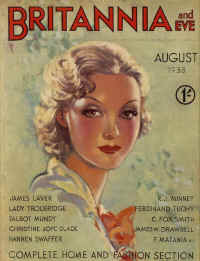
"Stargleam's Wings"
The Novel Magazine, August 1907
" 'The Wisdom of Age' "
Lady's Pictorial, October 1, 1910
" 'The Player Woman' "
Lady's Pictorial, October 22, 1910
" 'The Big One' "
Lady's Pictorial, December 17, 1910
"The Lavender Lady"
Lady's Pictorial, December 31, 1910
"The Final Redemption"
T.P.'s Magazine, March 1911
The Sunday Times (Perth, Western Australia), April 16, 1911
" 'The Arcadian Atalanta and the American' "
Lady's Pictorial, September 9, 1911
"The Inspired Christmas Card"
The Red Magazine, December 15, 1911
"The Inflexibility of Aunt Estelle"
The Red Magazine, January 15, 1912
"The Dream-House"
The Red Magazine, February 1, 1912
" 'The Sacrifice' "
Lady's Pictorial, March 9, 1912
"The April Fool"
The Red Magazine, April 1, 1912
"Haters Both"
Story Journal, 1912 (issue date unknown, although I believe this short story
appeared in either the August or September 1912 edition of Story Journal)
"The White Violet Siege"
Lady's Pictorial, September 7, 1912
The Boston Globe (Massachusetts, U.S.A.), September 14, 1913
"The Lady of the Azure Ear-ings"
Lady's Pictorial, November 16, 1912
"The Old Waiting-Room Attendant"
The Bathurst Times (New South Wales, Australia), November 23, 1912
This is almost certainly a reprint of a short story that had previously appeared in a
British periodical. The original publication details are unknown.
"The People Next Door"
Woman's Weekly, 1912 (this was a weekly publication; issue date unknown)
"As Furnished by Pam"
The Red Magazine, January 1, 1913
"The Girl Who Hadn't Time"
The Express and Telegraph (Adelaide, South Australia), February 22, 1913
This is almost certainly a reprint of a short story that had previously appeared in a
British periodical. The original publication details are unknown.
"When Spring Came"
The Red Magazine, March 1, 1913
"The Marrying of James"
Lady's Pictorial, March 15, 1913
"The Four-Leaved Shamrock"
The Bathurst Times (New South Wales, Australia), July 5, 1913
This is almost certainly a reprint of a short story that had previously appeared in a
British periodical. The original publication details are unknown.
" 'The Bond' "
Lady's Pictorial, August 9, 1913
"The Rebel"
The London Magazine, September 1913
The Red Magazine, June 1939
" 'Rich Man, Poor Man' "
The Red Magazine, September 1, 1913
"Seeing It Through"
The Red Magazine, September 15, 1913
Ainslee's, February 1914
"Palestrina"
The Woman at Home, October 1913
"Madame at the Window"
The London Magazine, November 1913
"The Old Folks' Party"
The Red Magazine, December 15, 1913
" ' The Funny Little Fellow' "
Lady's Pictorial, January 10, 1914
" 'The Scarlet Scarf'' "
Lady's Pictorial, January 31, 1914
"The Spook Gardener"
The Red Magazine, March 14, 1914
"What Happened"
The Pall Mall Magazine, April 1914
" 'The Heart-Rose' "
The Red Magazine, June 1, 1914
"The Knight in the Background"
The Red Magazine, July 1, 1914
"The Match That Wasn't 'Made' "
The Warwick Examiner and Times (Queensland, Australia), December 7, 1914
This is almost certainly a reprint of a short story that had previously appeared in a
British periodical. The original publication details are unknown.
"The Magic Ring"
The Mail (Adelaide, South Australia), December 19, 1914
The Mail (Adelaide, South Australia), December 26, 1914
The Bendigo Independent (Victoria, Australia), May 29, 1915
This is almost certainly a reprint of a short story that had previously appeared in a
British periodical. The original publication details are unknown.
"Beneath the Stars"
The Suffolk Chronicle and Mercury, December 25, 1914
The Barnsley Chronicle, January 9, 1915
The Illustrated Leicester Chronicle, July 31, 1915
The Melton Mowbray Mercury and Oakham and Uppingham News, August 5, 1915
The Norfolk News, September 25, 1915
The Brisbane Telegraph (Queensland, Australia), December 28, 1915
The Week (Brisbane, Queensland, Australia), January 7, 1916
The Grays and Tilbury Gazette (Essex), January 8, 1916
The Leigh Chronicle and Weekly District Advertiser (Lancashire), September 15,
1916
The Banbridge Chronicle (Down, Northern Ireland), October 11, 1916
The Holloway & Hornsey & Harringay & Muswell Hill Press, May 31, 1918
The Holloway & Hornsey & Harringay & Muswell Hill Press, December 27,
1918
The Holloway & Hornsey & Harringay & Muswell Hill Press, May 23, 1919
"The Tea Man"
The Red Magazine, January 1, 1915
"The New Piano"
The Prahran Chronicle (Victoria, Australia), March 6, 1915
This is almost certainly a reprint of a short story that had previously appeared in a
British periodical. The original publication details are unknown.
"The Carnation Siege"
The Red Magazine, April 1, 1915
" 'Wireless' "
The London Magazine, June 1915
" 'And That's That!' "
The London Magazine, September 1915
The Catholic Weekly (Sydney, New South Wales, Australia), December 2, 1915
The Freeman's Journal (Sydney, New South Wales, Australia), December 2, 1915
"The Missing Week"
The New Magazine (British edition), September 1915
"The Call of Youth"
The Novel Magazine, November 1915
"Why the Winnes Left London"
Lady's Pictorial, November 20, 1915
(story title unknown)
Lady's Pictorial, December 1915 (this was a weekly publication; issue date
unknown)
" 'No Place Like Home!' "
The London Magazine, December 1915
"The Courting Chair"
The Windsor Magazine, January 1916
"The Baby Next Door"
The Royal Magazine, March 1916
"The Altar of 4%"
The Royal Magazine, April 1916
"The Fiancés"
The Novel Magazine, May 1916
"The Green Armleteer"
The Royal Magazine, June 1916
"Reality"
The Premier Magazine, June 1916
The Red Magazine, May 1935
(story title unknown)
Home Notes, June 17, 1916 (this edition was advertised as a "special fiction
number" of the magazine)
"The Year's Legacy"
The Royal Magazine, July 1916
"Tilda's Party"
The Royal Magazine, September 1916
"A Tin Town Tale"
The New Magazine (British edition), September 1916
"The Third-Floor Prince"
The Novel Magazine, October 1916
"Weepy Kate"
The Royal Magazine, October 1916
"The Swashbuckler's Lady"
The Royal Magazine, November 1916
(story title unknown)
Lady's Pictorial, November 22, 1916 (this edition was advertised as a
"Christmas double number" of the magazine)
"Parsons' Wives"
The Royal Magazine, December 1916
"The Madonna in the Blue Cloak"
This short story dates from 1916. At the time of writing, the title of the
magazine it was originally published in and the issue date are unknown to me.
The Saturday Express (Adelaide, South Australia), August 3, 1918
The Adelaide Chronicle (South Australia), August 10, 1918
"Mrs Smith—of Picardy"
This short story dates from 1916. At the time of writing, the title of the magazine it was
originally published in and the issue date are unknown to me.
The Adelaide Chronicle (South Australia), November 23, 1918 (this short story is
reprinted here under the title "Mrs. Smith of Picardy")
"The Pink Pig"
This short story dates from 1916. At the time of writing, the title of the
magazine it was originally published in and the issue date are unknown to me.
The Leader: A Weekly Journal of News, Politics, Agriculture, Literature, Science and
Sport (Melbourne, Victoria, Australia), October 12 and 19, 1918 (reprinted here as a
two-part serial)
"Borrowed Plumes"
The Novel Magazine, January 1917
"Her Grace Cupid"
The Royal Magazine, January 1917
"The Plush Bear"
The Star (Christchurch, New Zealand), January 13, 1917
This short story was originally published in The Woman at Home. I have been
unable to identify the issue date. However, the story has a Christmas theme, so it is
likely to have first appeared in the December 1916 edition of The Woman at Home.
"The Cottage That She Furnished" (a two-part serial)
Lady's Pictorial, January 20 and 27, 1917
"Daddy Home for Good"
Western Women (Perth, Western Australia), February 1917
This is almost certainly a reprint of a short story that had previously appeared in a
British periodical. The original publication details are unknown.
"The Quickest Girl in Hospital"
The Grand Magazine, March 1917
"Two Simple Souls"
The Royal Magazine, March 1917
"The All-in-a-Minute Husband" (a twelve-part serial)
The Sunday Pictorial, April 29—July 15, 1917
"Love and Flame" (serial)
Woman's Life, 1917 (I believe the first instalment of this serial was in either
the May or June 1917 edition of this magazine; further details unknown)
It should be noted here that in one advertisement for this serial, it was referred to as
"The Love Flame".
"Ann at War"
The Windsor Magazine, July 1917
"His Loving Friend"
Cassell's Magazine of Fiction, August 1917
(story title unknown)
The Woman at Home and Girls' Realm, October 1917
(story title unknown)
Lady's Pictorial, November 21, 1917 (this edition was advertised as a
"Christmas double number" of the magazine)
"All Frightfully Ordinary"
Lady's Pictorial, November 24, 1917
"The Girl Without a Boy" (serial)
The Illustrated Sunday Herald, January 20, 1918 (first instalment; further
details unknown)
(story title unknown)
Woman's Life, February 1918 (this was a weekly publication; issue date unknown)
" 'Some' Blossom"
The Woman at Home and Girls' Realm, March 1918
The Leader: A Weekly Journal of News, Politics, Agriculture, Literature, Science and
Sport (Melbourne, Victoria, Australia), April 27—May 18 (a
four-part serial)
" 'The Incident' "
The Boston Sunday Globe (Massachusetts, U.S.A.), April 21, 1918
This is a reprint of a short story that first appeared in the British magazine Lady's
Pictorial. I have been unable to identify the original issue date.
"Faith, Hope, and Maria"
The Woman at Home, May 1918
"The Most Illusive Perfume in the World"
The Red Magazine, June 1918
(story title unknown)
The Home Magazine (British edition), October 1918
"Mrs Plump and the Princess"
The Irvine Herald (Ayrshire, Scotland), December 20, 1918
"Three Golden Balls and One Moon"
The Express (Adelaide, South Australia), January 18, 1919
This is almost certainly a reprint of a short story that had previously appeared in a
British periodical. The original publication details are unknown.
"A Bad Little Story"
The Saturday Express (Adelaide, South Australia), February 8, 1919
This is almost certainly a reprint of a short story that had previously appeared in
a British periodical. The original publication details are unknown.
"Mr. Mews and Miss Mews"
The Windsor Magazine, May 1919
(story title unknown)
The Home Magazine (British edition), June 1919
"The Suicide Blond"
The Home Magazine (British edition), August 1919
"Women Want Such a Lot"
The Home Magazine (British edition), September 1919
"The Legalised Charwoman"
The Royal Magazine, September 1919
(story title unknown)
The Home Magazine, December 1919
"Good Gooseberry"
The Royal Magazine, December 1919
"Week After Christmas"
The Hamilton Daily Times (Ontario, Canada), December 20, 1919
This is almost certainly a reprint of a short story that had previously appeared in a
British periodical. The original publication details are unknown.
(story title unknown)
The Home Magazine (British edition), January 1920
(story title unknown)
The Home Magazine (British edition), February 1920
"The Amateur Vamp"
The Royal Magazine, April 1920
Metropolitan, November 1920
(story title unknown)
The Home Magazine (British edition), May 1920
"Catchpenny Ann"
The Royal Magazine, May 1920
Metropolitan, April 1921
"The Barnacle Woman"
The Royal Magazine, June 1920
"When the Birds Build in Your Garden"
The Home Magazine (British edition), July 1920
"The Quiet Wife"
The Royal Magazine, September 1920
"Pennies for God" (a twelve-part serial)
The Home Magazine (British edition), September 1920—August
1921
"The Marriage Mask"
The Royal Magazine, December 1920
Sunset: The Pacific Monthly, July 1922
This amusing story is about a housewife who goes on strike and gets a job as a cook
somewhere else!
(story title unknown)
The Royal Magazine, February 1921
"Caretakers Within"
The Saturday Evening Post, February 5, 1921
This short story, a big hit with readers of The Saturday Evening Post, was
adapted by Metro Pictures into the humorous silent movie Life's Darn Funny
(1921). Heavily publicised in America when it was released, the film was directed by
Dallas M. Fitzgerald and starred Viola Dana, Gareth Hughes and Eva Gordon. Mary O'Hara
wrote the screenplay based on Christine Jope-Slade's story, while Molly Parro and Arthur
Ripley created the scenarios which appear in the movie.
"The Wild Lad from Wigan"
The Royal Magazine, March 1921
Sunset: The Pacific Monthly, July 1921
"The Golden Idol"
The Saturday Evening Post, April 16, 1921
"Grubstaking Cinderella"
The Saturday Evening Post, June 11, 1921
Cassell's Magazine of Fiction, April 1925
The Red Magazine, January 1938
"Big Ben's Little Brother"
The Sovereign Magazine, November 1921
"Peter Passes"
The Saturday Evening Post, November 19, 1921
The Royal Magazine, December 1921
"Carminetta the Cat"
The Royal Magazine, January 1922
The Evening Journal (Adelaide, South Australia), June 22, 1922
"The Belle in the Bonnet"
The New Magazine (British edition), March 1922
"He and I Together"
The Royal Magazine, March 1922
"Everything in Its Place"
The Royal Magazine, April 1922
"Harvest of Fools"
The Royal Magazine, July 1922
" 'It's Not the Same When You're Married' "
The Royal Magazine, August 1922
"The Molehills of Marriage"
Cassell's Magazine of Fiction, August 1922
"The Tip-Toe Lover"
The Royal Magazine, December 1922
"The Resurrection Portrait"
The Royal Magazine, February 1923
"The Pricked Bubble"
The New Magazine (British edition), April 1923
"The Strategist"
Ainslee's, May 1923
"Woman Stuff"
The Story-teller, May 1923
"The Man Who Feared Beauty"
Sunset: The Pacific Monthly, October 1923
The New Magazine (British edition), November 1923
"The Temple of Straw"
The Story-teller, March 1924
"Spring Comes"
Ladies' Home Journal, April 1924
"I Knew Her Personally"
Cassell's Magazine of Fiction, August 1924
"Miss Miggs of Monte Carlo"
Ladies' Home Journal, August 1924
The Story-teller, September 1924
" 'Husband Into Lover' "
Cassell's Magazine of Fiction, September 1924
(story title unknown)
The Story-teller, September 1924
"Kindred Spirits"
The Home Magazine (British edition), October 1924
(story title unknown)
Gladys Peto's Children's Book, Sampson Low, 1924
This book is an annual that contains stories and poems by various authors with
accompanying illustrations by Gladys Peto.
"Cleopatra Was a Blonde"
Ladies' Home Journal, January 1925
The Royal Magazine, February 1925
"H.R.H. Hoblin"
The Story-teller, March 1925
Ladies' Home Journal, May 1925 (this short story is reprinted here under the
title "Her Royal Highness Hoblin")
An advertisement for the May 1925 edition of Ladies' Home Journal described this
short story as follows: "Love seemed alien to her—yet to one
Russian prince this little, faded governess stood ever as Her Royal Highness Hoblin in
Christine Jope-Slade's romance."
"The Little Lost Church"
Ladies' Home Journal, April 1925
Cassell's Magazine, May 1925
The Argosy (British edition), October 1930
"A Fall of Golden Rain"
The Story-teller, May 1925
The Voice (Hobart, Tasmania, Australia), March 27, 1937
"Marriage Is Only the Beginning"
The Novel Magazine, June 1925
"Pierre Becomes Pierrot"
Cassell's Magazine, October 1925
The Saturday Journal (Adelaide, South Australia), January 23, 1926
"The Woman Who Knew Whistler"
Ladies' Home Journal, October 1925
The Sunday Times (Perth, Western Australia), March 15 and 22, 1936 (this short
story is reprinted here as a two-part serial)
"Puppy Dreams"
The Story-teller, November 1925
"Rosie Guttenburgh"
The New Magazine (British edition), November 1925
"A Sneeze in Time"
The Royal Magazine, February 1926
(story title unknown)
The Christmas Ladies' Home Journal, December 1926
"Babichiok and the Unicorn"
Ladies' Home Journal, February 1927
"The Gallant Maid"
Everylady's, July 1927
"The Line of Pom-Pom's Pants"
The New Magazine (British edition), November 1927
"The Hideous Tea Set"
The Story-teller, January 1928
"Palaces and Poppycock"
The Story-teller, March 1928
The Toronto Star Weekly, June 1, 1929
This short story was described in The Toronto Star Weekly as a "delightfully
humorous study of a charwoman who had great faith in the rich folk of the British Court
circle for whom she worked from day to day".
"It Was So Kind of Her"
The Home Magazine (British edition), March 1928
"The Bridesmaids to a Thousand Brides"
Chatelaine, June 1928
The Story-teller, August 1928
The Argosy (British edition), December 1935
"The Film Actor"
The Daily Mirror, July 21, 1928
"Who Loves a Garden"
The Daily Mail, August 1928
(story title unknown)
The Story-teller, August 1928
"Marriage on Approval"
The Redbook Magazine, September 1928
This short story is a romance about a young English boy and an American girl in Paris who
are in love and have in common certain modern ideas about life and relationships.
"Moving In"
The Sunday Dispatch, September 30, 1928
This short story was described as an "amusing sketch of domestic life" by The
Sunday Dispatch
"The Thirteenth Blonde"
The Story-teller, October 1928
(story title unknown)
Modern Woman, November 1928
(story title unknown)
Eve: The Lady's Pictorial, December 1928 (this edition was advertised as an
" 'All Star' Christmas number" of this weekly publication; issue date unknown)
"Armistice"
The Redbook Magazine, December 1928
This short story, published ten years after the end of the Great War, was described by the
editors of The Redbook Magazine as "told by an Englishwoman
familiar with war and speaking for those, throughout the world, who may be brave enough
'to live quietly' ".
"The Little Laughing Madonna"
The Story-teller, December 1928
The Toronto Star Weekly, February 9, 1929
Everywoman's, April 1934
"The Man Who Ran Away"
The Daily Mirror, December 24, 1928
(story title unknown)
The China Cow and Other Stories, Sampson Low, 1929
This anthology was illustrated by Gladys Peto and includes stories by Christine
Jope-Slade, Sewell Stokes, Berta Ruck, G. B. Stern and others.
"April Face"
Cassell's Magazine, February 1929
"Bondage"
The New Magazine (British edition), March 1929
"The Princess and the Cossack"
Romance, April 1929
"Tin-Tin-Twopenny"
Cassell's Magazine, April 1929
Chatelaine, May 1929
The Voice (Hobart, Tasmania, Australia), November 21, 1931
"Any Lady Would"
The Story-teller, May 1929
"Folly-Dolly"
The Redbook Magazine, May 1929
Woman's Journal, December 1929
"Gentleman of the Chorus"
Woman's Journal, May 1929
"Very Great Lady"
Woman's Home Companion, May 1929
"Backed by a Millionaire"
The Daily Mail, May 21, 1929
"God Wot"
Chatelaine, July 1929
"But People Don't Know"
Britannia and Eve, September 1929
"A Street is Going Somewhere"
The Daily Mail, September 25, 1929
"Life is So Crude"
The Bystander, September 25, 1929
"Screaming the House Down"
The Daily Mail, October 9, 1929
"Clever Feat"
Everybody's Combined with Romance, December 1929
"The Man Who Read Hands"
The New Magazine (British edition), December 1929
"The Sun Shines on Everyone"
Home Magazine and the Ladies Field, December 1929
(story title unknown)
Woman's Journal, December 1929
"The Woman Who Rented Paradise"
Britannia and Eve, January 1930
The Australian Women's Weekly, April 20, 1935
"Hubba's Up!"
The Story-teller, February 1930
"We All Have Our Private Dope"
The Bystander, April 30, 1930
"Wisdom Teeth"
Cassell's Magazine, May 1930
"Love and How!"
The Bystander, June 4, 1930
"That Piece in the Paper"
The Novel Magazine, June 1930
"She Showed Her"
Liberty, June 28, 1930
"At the Smart Hotels One Meets"
Good Housekeeping (British edition), July 1930
"Dear Things Are Expensive"
Britannia and Eve, July 1930
"The Passionate Guardian"
The New Magazine (British edition), July 1930
"A Mouse in the Room"
The Graphic, August 2, 1930
"None So Blind"
The Grand Magazine, October 1930
" 'The Lovely Virtue' "
The Adelaide Chronicle (South Australia), October 16, 1930
This is a reprint of a short story that first appeared in the British magazine Home
Chat. I have been unable to identify the original issue date.
(story title unknown)
The Grand Magazine, November 1930
"Unflaming Youth"
Britannia and Eve, November 1930
"Told in Pique"
The Bystander, November 28, 1930 (this edition was advertised as a "special
Christmas number" of the magazine)
(story title unknown)
Woman's Journal, December 1930 (this edition was advertised as an "enlarged
Christmas number" of the magazine)
"Hot Lobster at Dawn"
The Graphic, December 27, 1930
"Straight from Prison"
Britannia and Eve, January 1931
"Men Talk Too Much"
The Bystander, January 1931
"Wild Cherry"
Cassell's Magazine, January 1931
"Britannia of
Billingsgate"
Nash's—Pall Mall Magazine, March 1931
The Deliniator, March 1931
The Toronto Star Weekly, September 3, 1932
Pearson's Weekly, March 7, 1936
Please see the Plays and Novels
sections of this webpage for details on how this humorous short story, about a charwoman
who becomes a film star, was adapted into a stage play, a novel and a feature film.
"Air Minded"
MacLean's, August 1, 1931
The Story-teller, January 1932
(story title unknown)
Mabs Weekly, September 29, 1931
"Good Men Don't Understand Women"
Britannia and Eve, October 1931
The Novel Magazine, May 1936
"Silver Threads"
Redbook Magazine, November 1931
The Novel Magazine, February 1932
"Cain and Abel—the Story of the First
Murder"
The Sunday Chronicle, November 8, 1931
In November and December 1931, The Sunday Chronicle published a series of
tales by eight different authors; among these was Christine Jope-Slade. Each writer was
given the task to retell a story from the Bible using modern language. The other
contributors were Warwick Deeping, Ethel Mannin, Winston Churchill, Lord Dunsany, Sir
Philip Gibbs, Gilbert Frankau and Clemence Dane. Christine Jope-Slade gave a reading of
her modernised version of the tale of Cain and Abel at the Great George Street
Congregational Church in Liverpool on the evening of December 6, 1931.
"Flies on Sugar"
The Windsor Magazine, December 1931
" 'I'll Show Her!' "
The Novel Magazine, December 1931
"Twice Round the Park"
The Story-teller, December 1931
"The Hag-Minder"
Britannia and Eve, January 1932
(story title unknown)
The Novel Magazine, February 1932
"She Wanted the Day Back"
Weldon's Bazaar of Children's Fashions, March 1932
"A Girl Must Live"
The Story-teller, March 1932
"My Sister's Like That!"
The Bystander, March 23, 1932
"Men Get All the Medals!"
The Novel Magazine, April 1932
(story title unknown)
Modern Woman, April 1932
"A Street Is Going Somewhere"
Weldon's Ladies' Journal (formerly The Home Magazine), April 1932
"This Is Not Living!"
The Novel Magazine, May 1932
"The Identity Parade"
The Strand Magazine, June 1932
The Grand Magazine, November 1935
"He Called Her 'Golden Girl' "
The Sunday Dispatch, July 31, 1932
(story title unknown)
Twelve Best Stories from Good Housekeeping, ed. Alice M. Head, Ivor Nicholson
& Watson, 1932
The stories in this anthology were selected by Alice M. Head, who was the editor-in-chief
of Good Housekeeping magazine at the time this book was published. Although I
have been unable to identify the title of the Christine Jope-Slade's short story, I
suspect it is "At the Smart Hotels One Meets", which appeared in the July 1930
issue of Good Housekeeping.
"Buy a Pretty Husband"
The Illustrated Love Magazine, August 1932
(story title unknown)
Good Housekeeping (British edition), August 1932
"They Got on Swimmingly Together"
The Windsor Magazine, September 1932
This short story was described as a "social comedy" in advertisements for the
September 1932 edition of The Windsor Magazine. Indeed, the title is a glorious
pun because Christine Jope-Slade's tale is about a spinster who happened to be an
excellent diver!
"A Mole Buries Itself"
The Windsor Magazine, October 1932
The following extract is from an advert for the October 1932 edition of The Windsor
Magazine: "Christine Jope-Slade's story records the effect upon Ada Mole,
middle-aged and cantakerous, of seeing 'A. Mole' on a stone-mason's sample
tombstone." Sounds hilarious!
"The Gentleman to Wind the Clock"
The Windsor Magazine, November 1932
"Women Talk So Carelessly"
Britannia and Eve, November 1932
"Bluebells at Christmas"
The Windsor Magazine, December 1932
"Where Lost Things Live"
The Novel Magazine, December 1932
(story title unknown)
Modern Short Stories for Oral Interpretation, ed. Mabel Pearl Lloyd, G. Banta,
1933
"Little Perfection" (a five-part serial)
Canadian Home Journal, January—May, 1933
" 'How Are You, My Beautiful?' "
The Novel Magazine, February 1933
"Then the Chimney Smoked"
The Windsor Magazine, February 1933
Advertisements for the February 1933 edition of The Windsor Magazine described
this short story as a "village comedy".
"Through a Man's Monocle"
Maclean's, February 1, 1933
"Things Never Go Wrong for Kings"
The Windsor Magazine, April 1933
This short story is about a man who has been lucky all his life but nevertheless manages
to avoid being completely spoilt.
"The Earthbound Meal"
Modern Woman, April 1933
The Australian Women's Weekly, May 5, 1934 (this short story is reprinted here
under the title "The Earth-Bound Meal")
This short story was described as a "delightful little romance" in
advertisements for the April 1933 edition of Modern Woman.
"The Beauty-Parlour Ghost"
The Novel Magazine, May 1933
"Loot"
Everybody's Weekly, May 9, 1933
"The Sunbather"
The Novel Magazine, June 1933
"This Canary Sang"
The Story-teller, June 1933
"A Man in Danger"
The Passing Show, June 17, 1933
"A Baby in the Case"
The Passing Show, July 1, 1933
"Laughter"
Time and Tide, July 29, 1933
"Crowning Glory"
The Windsor Magazine, August 1933
This short story is about a romance between a young doctor and his female patient who has
compromised her health in order to maintain her beautiful mane of golden hair!
"One Man Dog"
The Story-teller, August 1933
"Shore Excursion"
Britannia and Eve, August 1933
"Mr. Clever"
The Passing Show, August 12, 1933
The Australian Women's Weekly, March 30, 1935
"White Elephants, Please"
Pearson's Magazine, September 1933
"Amelio's Monkey"
The Story-teller, October 1933
"Green Fingers"
Good Housekeeping (British edition), October 1933
Good Housekeeping (U.S.A. edition), August 1934
According to an advertisement for the October 1933 edition of Good Housekeeping,
"Green Fingers" tells the story of a woman who not only lovingly nurtured her
garden, but also "made hearts blossom".
"Virgins to Venice"
Britannia and Eve, October 1933
"The Pied Piper's Daughter"
The Passing Show, October 28, 1933
"A Good Girl Deserves Good Diamonds"
The Sphere, November 22, 1933 (this edition was advertised as a "Christmas
number" of the magazine)
"A White Christmas"
The Royal Pictorial, December 1933 (this edition was advertised as a
"Christmas number" of the magazine)
"All-Day Widows"
The Bystander, December 1, 1933 (this edition was advertised as a "Christmas
number" of the magazine)
"Close-up of a Baby"
The Passing Show, December 23, 1933
"More French than the French"
My Naughtiest Story: An Anthology of Stories Chosen By Their Own Authors , Faber
& Faber, 1934
More French than the French (audio chapbook), Red Door Consulting, 2017
Great Humorous Stories (audio book), Red Door Consulting, 2017
This short story is about a young English woman who has a romantic encounter with an
English gentleman in Paris. She pretends to him that she is French!
"Laugh, Clown, Laugh"
The Passing Show, January 13, 1934
"Twigs Tells the Truth"
The Passing Show, January 27, 1934
"When the Pie Was Opened"
The Passing Show, February 10, 1934
"The Tumble Twins Go Bogey"
The Passing Show, February 24, 1934
This short story is one of several that feature the character "Twinkle".
"Spring Was in the Air"
Chatelaine, March 1934
"The Right to Happiness" (a five-part serial)
Weldon's Ladies' Journal, March, April, May, June and July 1934
"Sense of Value"
Pearson's Magazine, March 1934
"The Woman Who Knew Pavlova"
The Passing Show, March 24, 1934
This short story is one of several that feature the character "Twinkle".
"Easter Eggs for All"
Chatelaine, April 1934
(story title unknown)
Modern Woman, April 1934
(story title unknown)
Everywoman's, April 1934
"Monkey-Wise"
The Passing Show, April 28, 1934
This short story is one of several that feature the character "Twinkle".
"The Bride"
The Novel Magazine, June 1934
"Blue Gentians"
The Story-teller, July 1934
(story title unknown)
Weldon's Ladies' Journal, August 1934
"Two Wise Wives"
The Passing Show, August 11, 1934
"Full Dress Uniform"
Britannia and Eve, September 1934
"Bank Holiday Bus"
Weldon's Ladies' Journal, September 1934
"Castles in Spain"
The Windsor Magazine, October 1934
"One Puppy—One Christmas"
Pearson's Magazine, December 1934
"Shadow Christmas Trees"
The Novel Magazine, December 1934
(story title unknown)
Everywoman's, December 1934
"Mack and Tosh"
The Passing Show, December 15, 1934
"Flag Day"
The Daily Herald, December 22, 1934
"The Man Who Launched the Angels"
Redbook Magazine, January 1935
The Grand Magazine, April 1939
"Galahad of the Circuit"
Chatelaine, February 1935
"Bun and the Angel"
The Passing Show, February 16, 1935
This short story is one of several that feature the character "Bun Browne".
"Angel of the Opera"
The Story-teller, March 1935
"Bun's Old Baby"
The Passing Show, March 9, 1935
This short story is one of several that feature the character "Bun Browne".
"Poor Em'ly Fidgett"
The Passing Show, March 30, 1935
This short story is one of several that feature the character "Bun Browne".
"The Sun Seekers"
Chatelaine, April 1935
A photo of Christine Jope-Slade with her daughter, Jill, was printed on the
contents page of the April 1935 edition of Chatelaine, which I have reproduced
below:
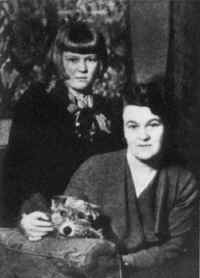
Christine Jope-Slade and her daughter, Jill in 1935.
"Angel Into Lady"
The Passing Show, April 13, 1935
This short story is one of several that feature the character "Bun Browne".
"The Skeleton at the Feast"
The Passing Show, April 27, 1935
This short story is one of several that feature the character "Bun Browne".
"Fortune's Spy"
The Passing Show, May 18, 1935
This short story is one of several that feature the character "Bun Browne".
"She Talked in Her Sleep"
The Sunday Standard-Times (New Bedford, Massachusetts, U.S.A.), May 26, 1935
The Edmonton Bulletin (Alberta, Canada), June 1, 1935
The Hamilton Spectator (Ontario, Canada), June 1, 1935
The Sunday News (New York City, U.S.A.), June 2, 1935 (the Sunday edition of The
Daily News)
The San Francisco Chronicle (California, U.S.A.), June 2, 1935
The Springfield Sunday Union and Republican (Massachusetts, U.S.A.), June 2, 1935
The Hartford Daily Courant (Connecticut, U.S.A.), June 2, 1935
The News and Observer (Raleigh, North Carolina, U.S.A.), June 2, 1935
The Winnipeg Tribune Magazine (Manitoba, Canada), June 8, 1935
The Daytona Beach News-Journal (Florida, U.S.A.), June 9, 1935
The San Antonio Express (Texas, U.S.A.), June 9, 1935
The Buffalo Evening News (New York, U.S.A.), June 15, 1935 (this short story is
reprinted here under the title "The Sleep Talker")
The Standard (Montreal, Canada), June 22, 1935
The Novel Magazine, July 1935
The Oregonian Fiction Weekly, July 14, 1935 (a supplement to The Sunday
Oregonian, published in Portland, Oregon, U.S.A.)
The Montana Oil and Mining Journal (Billings, Montana, U.S.A.), August 3 and 10,
1935 (this short story is reprinted here as a two-part serial)
The Lima Ledger (Montana, U.S.A.), August 8 and 15, 1935 (this short story is
reprinted here as a two-part serial)
The Choteau Acantha (Montana, U.S.A.), August 8 and 15, 1935 (this short story is
reprinted here as a two-part serial)
The Mountaineer (Big Sandy, Montana, U.S.A.), August 8 and 15, 1935 (this short
story is reprinted here as a two-part serial)
The Forsyth Independent (Montana, U.S.A.), August 8 and 15, 1935 (this short
story is reprinted here as a two-part serial)
The Tribune of Shelby (Montana, U.S.A.), August 8 and 15, 1935 (this short story
is reprinted here as a two-part serial)
The Kalispell Times (Montana, U.S.A.), August 8 and 15, 1935 (this short story is
reprinted here as a two-part serial)
The Roundup Record-Tribune (Montana, U.S.A.), August 8 and 15, 1935 (this short
story is reprinted here as a two-part serial)
The Jordan Tribune (Montana, U.S.A.), August 8 and 15, 1935 (this short story is
reprinted here as a two-part serial)
The Cascade Courier (Montana, U.S.A.), August 8 and 15, 1935 (this short story is
reprinted here as a two-part serial)
The Pondera County News (Conrad, Montana, U.S.A.), August 8 and 22, 1935 (this
short story is reprinted here as a two-part serial)
The Bozeman Courier (Montana, U.S.A.), August 9 and 16, 1935 (this short story is
reprinted here as a two-part serial)
The Searchlight (Culbertson, Montana, U.S.A.), August 9 and 16, 1935 (this short
story is reprinted here as a two-part serial)
The Mineral Independent (Superior, Montana, U.S.A.), August 15 and 22, 1935 (this
short story is reprinted here as a two-part serial)
The Short Story Magazine, February 7, 1937 (a supplement to the Sunday edition of
The Detroit Free Press, published in Michigan, U.S.A.)
This short story appeared in numerous Montana state newspapers by special arrangement with
the Chicago Tribune—New York News Syndicate, Incorporated. I believe
"She Talked in Her Sleep" was first published in The Chicago Tribune,
but at the time of writing I have been unable to ascertain the original issue date.
"Business Women Can't Quit" (a four-part serial)
Weldon's Ladies' Journal, June, July, August and September 1935
"Eyes—Laughing Blue"
The Windsor Magazine, June 1935
This is a love story, according to advertisements for the June 1935 edition of The
Windsor Magazine.
(story title unknown)
Holiday Stories, John Leng & Co., 1935 (this annual was published by the
proprietors of The People's Friend magazine in June 1935)
"The Pacifist's Son"
The Passing Show, June 22, 1935
This short story is one of several that feature the character "Bun Browne".
"Prayer for Happiness"
Chatelaine, July 1935
"Gentleman Without Dress Tie"
The Grand Magazine, July 1935
"He Remembered to Forget"
The Passing Show, July 20, 1935
This short story is one of several that feature the character "Bun Browne".
"Bun's Brilliant Butterflies"
The Passing Show, August 17, 1935
This short story is one of several that feature the character "Bun Browne".
"Golden Roses"
The Passing Show, October 5, 1935
This short story is one of several that feature the character "Bun Browne".
"Your Daughter's Your Daughter"
Chatelaine, November 1935
"Mr. A, the Actor"
The Passing Show, November 9, 1935
This short story is one of several that feature the character "Bun Browne".
"Sports Model"
The Passing Show, November 30, 1935
"He Was Perfectly Charming"
Pearson's Magazine, December 1935
The Grand Magazine, October 1939
"Undelivered Christmas Mail"
Britannia and Eve, December 1935 (this edition was advertised as a
"Christmas number" of the magazine)
"Frenchmen Know Everything"
The Bystander, February 19, 1936
"Moon-Tigers"
The Bystander, March 4, 1936
"Modern Children Do Anything"
The Passing Show, March 21, 1936
"The Chief of the Train Decides"
The Passing Show, April 11, 1936
" 'What's Going on Here?' "
The Passing Show, May 16, 1936
"Mary-Lou's Hat"
The Passing Show, June 20, 1936
"Speed Slaves" (a short novel)
The Weekly Times (Melbourne, Victoria, Australia), June 27, 1936
This is almost certainly a reprint of a novel that had previously appeared in a British
periodical. The original publication details are unknown. An advertisement for the June
27, 1936 edition of The Weekly Times described Christine Jope-Slade's short novel
as a "story of life, love and adventure among the clouds".
"A Charming Man"
Summer Pie, Summer 1936
This holiday annual was published on July 8, 1936. Among the dozens of advertisements in
the press that I came across for this book, I was pleased to find one that mentioned the
title of Christine Jope-Slade's short story. Most of them did not!
"Flight Into Fantasy"
The Passing Show, July 11, 1936
"Strange Honesties"
Britannia and Eve, August 1936
The Toronto Star Weekly, October 17, 1936
Table Talk (Melbourne, Victoria, Australia), February 4, 1937
"The Broad-Minded Binge"
Britannia and Eve, September 1936
The Sydney Mail Christmas Number (New South Wales, Australia), December 1, 1937
"Star in Hiding"
The Passing Show, October 24, 1936
"Jealousy"
Mother, November 1936
According to advertisements for the November 1936 edition of Mother, this
provocative short story provides a "startling new angle on love triangles" and
asks the question: "Has any woman a right to be jealous?"
(story title unknown)
Wintertime Stories, John Leng & Co., 1936
This anthology was published on November 2, 1936. An advertisement for the book
proclaimed: "Here's the most sensational shillingsworth of the season. Forty long
complete romances by favourite authors. A bulky volume, in charming three-colour cover
with lots of illustrations."
"Lady Elusive"
The Passing Show, November 21, 1936
(story title unknown)
The Sketch, December 1936 (this edition was advertised as a "Christmas
number" of the magazine)
"A Child for Christmas"
Britannia and Eve, December 1936
The Grand Magazine, January 1940
"Mother for Christmas"
The Novel Magazine, December 1936
"5 o'Clock Tea for George"
The Passing Show, January 9, 1937
"Walking in His Sleep"
The Daily Mail, January 11, 1937
"Servant Made"
The Passing Show, February 6, 1937
"Weather Vain"
The Passing Show, March 6, 1937
"Ice Maiden" (a twelve-part serial)
The Daily Sketch, March 8—20, 1937
"Gooseberry Fool"
Weldon's Ladies' Journal, April 1937
"This Courting Chair Carried Romance"
The Edmonton Bulletin (Alberta, Canada), May 22, 1937
The Winnipeg Evening Tribune (Manitoba, Canada), May 22, 1937
The News and Observer (Raleigh, North Carolina, U.S.A.), May 23, 1937
The Springfield Sunday Union and Republican (Massachusetts, U.S.A.), May 23, 1937
The Sunday News (New York City, U.S.A.), May 23, 1937 (the Sunday edition of The
Daily News)
The Buffalo Evening News (New York, U.S.A.), May 29, 1937 (this short story is
reprinted here under the title "Courting Chair")
The Silver State Post (Deer Lodge, Montana, U.S.A.), July 5 and 22, 1937 (this
short story is reprinted here as a two-part serial)
The Montana Oil and Mining Journal (Billings, Montana, U.S.A.), July 10, 1937
(this short story was intended to be reprinted here as a two-part serial but the second
instalment appears never to have been published)
The Midland Empire Farmer (Hysham, Montana, U.S.A.), July 15 and 22, 1937 (this
short story is reprinted here as a two-part serial)
The Liberty County Times (Chester, Montana, U.S.A.), July 15 and 22, 1937 (this
short story is reprinted here as a two-part serial)
The Cascade Courier (Montana, U.S.A.), July 15 and 22, 1937 (this short story is
reprinted here as a two-part serial)
The Big Timber Pioneer (Montana, U.S.A.), July 15 and 22, 1937 (this short story
is reprinted here as a two-part serial)
The Billings Times (Montana, U.S.A.), July 15 and 22, 1937 (this short story is
reprinted here as a two-part serial)
The Fairview News (Montana, U.S.A.), July 15 and 22, 1937 (this short story is
reprinted here as a two-part serial)
The Augusta News (Montana, U.S.A.), July 15 and 22, 1937 (this short story is
reprinted here as a two-part serial)
The Saco Independent (Montana, U.S.A.), July 15 and 22, 1937 (this short story is
reprinted here as a two-part serial)
The Flathead Courier (Polson, Montana, U.S.A.), July 15 and August 5, 1937 (this
short story is reprinted here as a two-part serial)
The Glacier County Chief (Browning, Montana, U.S.A.), July 16 and 23, 1937 (this
short story is reprinted here as a two-part serial)
The Bainville Democrat (Montana, U.S.A.), July 16 and 23, 1937 (this short story
is reprinted here as a two-part serial)
The Medicine Lake Wave (Montana, U.S.A.), July 16 and 23, 1937 (this short story
is reprinted here as a two-part serial)
The Sanders County Independent-Ledger (Thompson Falls, Montana, U.S.A.), July 21
and 28, 1937 (this short story is reprinted here as a two-part serial)
The Rocky Mountain American (Manhattan, Montana, U.S.A.), July 22 and 29, 1937
(this short story is reprinted here as a two-part serial)
The Valerian (Valier, Montana, U.S.A.), July 22 and 29, 1937 (this short story is
reprinted here as a two-part serial)
The Dutton Sentinel (Montana, U.S.A.), August 6 and 20, 1937 (this short story is
reprinted here as a two-part serial)
The Rockford Register-Republic (Illinois, U.S.A.), April 30, 1938
All-Fiction Magazine, June 4, 1939 (a supplement to the Sunday edition of The
Detroit Free Press, published in Michigan, U.S.A.; this short story is reprinted here
under the title "The Courting Chair")
This short story appeared in numerous Montana state newspapers by special arrangement with
the Chicago Tribune—New York News Syndicate, Incorporated. I believe
"This Courting Chair Carried Romance" was first published in The Chicago
Tribune, but at the time of writing I have been unable to ascertain the original
issue date.
(story title unknown)
Fiction Parade (New York, U.S.A.), June 1937
This is a reprint of a short story that had previously appeared in a British or American
periodical. The original publication details are unknown.
"A House on Their Backs"
The Passing Show, June 26, 1937
(story title unknown)
Summer Pie, Summer 1937
This holiday annual was published on June 30, 1937. As with the previous year's Summer
Pie, it was heralded with a huge advertising campaign. All of the profits from the
book's sale were given to the National Advertising Benevolent Society and towards the cost
of constructing a new children's ward at a London hospital.
"Fannie's Last Party"
The Passing Show, July 17, 1937
An advertisement for the July 17, 1937 edition of The Passing Show described this
short story thusly: "She was young and beautiful and clever—but
they made a kitchen slave of her, for the sake of their parties and took the credit
themselves ... until—Don't miss this entrancing tale of a selfish family by Christine
Jope-Slade."
"The Girl Who Lost Tuesday" (a two-part serial)
The Daily Mirror, July 26 and 27, 1937
"The Taming of David Savage"
Pearson's Magazine, August 1937
"New Star Over London"
The Novel Magazine, September 1937
"How to Get a Husband" (serial)
The Daily Sketch, September 1937 (issue dates unknown)
The first instalment of this serial story by Christine Jope-Slade was published in The
Daily Sketch in September 1937, certainly on or before the 20th of that month. At the
time of writing, no other details are known to me regarding the number of instalments or
how long this serial ran in the newspaper.
"Wedding Rings for Three" (a nine-part serial)
The Daily Sketch, September 18—28, 1937
Now here is a curiosity. This serial shares the same title as her 1920 novel of the same
name, which was also serialised in The Daily Sketch before being published in
book form by Hodder & Stoughton. I have noticed that the character's names are
different, so the appearance of this serial in The Daily Sketch is not a
direct reprint of the earlier novel. Having only read a synopsis and review of the
original book, one theory I can provide is that Christine Jope-Slade rewrote Wedding
Rings for Three, perhaps updating it for a modern audience while opting to use
alternative names for her characters. However, as the later serial in The Daily Sketch
is much shorter in length and, more importantly, the plot appears to be quite different to
that of the original, I think this is a another story altogether. Perhaps Christine
Jope-Slade simply liked the title and decided to reuse it!
"She Was Still the Foolish Wife"
The Tatler, September 29, 1937
"She Liked Intelligent People"
The Bystander, October 20, 1937
"The Goldfish in the Snow"
Pearson's Magazine, December 1937
The Australian Women's Weekly, October 28, 1939 (this short story is reprinted
here under the title "Goldfish in the Snow")
An advertisement for the December 1937 edition of Pearson's Magazine described
this short story as a "delightful tale of two inexperienced lovers".
"Puppy Fat"
Eve's Journal, January 1938 (this was a weekly publication; issue
date unknown)
"His Ninetieth Birthday"
John Bull, January 8, 1938
An advertisement for the January 8, 1938 edition of John Bull had this to say
about Christine Jope-Slade's short story: "She tells, with great charm and
understanding, of a miserly old man and what his girl secretary did to redeem his
character. Widowed mother of three, Christine Jope-Slade has a large following of readers
who like good craftsmanship as well as a plot and sound characterisation."
"Youth Must Be Served—Sometimes"
Britannia and Eve, April 1938
The Australian Women's Weekly, April 4, 1942
This short story is subtitled "But Not All the Time at the Expense of
Others".
"Very Partial to Blondes"
The Passing Show, May 28, 1938
"Blondes' Magic"
The Passing Show, July 30, 1938
" 'Women Don't Think' "
The Red Magazine, October 1938
"Just That Sort of Morning"
The Daily Mail, October 28, 1938
(story title unknown)
Modern Woman, November 1938
"Stooge Guest"
The Passing Show, November 26, 1938
(story title unknown)
Woman's Fair, January 1939
"Cocoa"
Eve's Journal, February 1939 (this was a weekly publication; issue date unknown)
"New Moon Through Glass"
Britannia and Eve, March 1939
The Australian Women's Weekly, February 24, 1940
"Always Tell the Doctor Everything"
Chatelaine, April 1939
"Ask a Policeman"
Illustrated, May 31, 1939
The Australian Woman's Mirror, January 23, 1940
"Low-Flying Duck"
Summer Pie, Summer 1939
This holiday annual was published on June 28, 1939.
"Routine Job"
The Evening Star (Dunedin, New Zealand), July 19, 1939
This is almost certainly a reprint of a short story that had previously appeared in a
British periodical. The original publication details are unknown.
"A Tonic Effect"
The Star, August 22, 1939
"The Divorce Dowry"
Everywoman's, October 1939
"They Got Away from Winter"
The Australian Women's Weekly, November 25, 1939
This is almost certainly a reprint of a short story that had previously appeared in a
British periodical. The original publication details are unknown.
"Christmas Ghosts"
The American Weekly, December 24, 1939 (a supplement to the Sunday
editions of various American newspapers)
"Where Dreams Are For Sale"
Everywoman, February 1940
The Australian Women's Weekly, August 9, 1941 (this short story is reprinted here
under the title "Dreams for Sale")
"Level-headed"
The Australian Woman's Mirror, February 20, 1940
This is almost certainly a reprint of a short story that had previously appeared in a
British periodical. The original publication details are unknown.
"Silky Puss"
Weldon's Ladies' Journal, March 1940
"Star Nurse"
Mother and Home, April 1940
Described as a novel in an advertisement for the April 1940 edition of Mother and Home,
I have been unable to verify whether "Star Nurse" was a short novel that
appeared complete in this one issue or was published in instalments. If the latter was
true, I believe the first instalment was in the April 1940 issue.
(story title unknown)
Everywoman, April 1940
(story title unknown)
Weldon's Ladies' Journal, October 1940
"Santa Claws"
The Sketch, December 25, 1940
"Told on a White Piano"
Britannia and Eve, April 1941
"Road House Hostess"
The Australian Women's Weekly, July 26, 1941
This is almost certainly a reprint of a short story that had previously appeared in a
British periodical. The original publication details are unknown.
"Material for a Dream"
The Australian Women's Weekly, February 14, 1942
This is almost certainly a reprint of a short story that had previously appeared in a
British periodical. The original publication details are unknown.
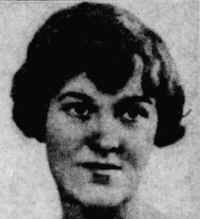
Christine Jope-Slade in 1928.
Britannia of Billingsgate
This play was written by Christine Jope-Slade and Sewell Stokes (1902-1979), a friend of
hers and fellow author whose short fiction appeared in some of the same magazines she sold
her work to. The source material of the play was a short story by
Christine Jope-Slade that was originally published in the March 1931 issue of Nash's—Pall Mall Magazine. The first stage production of Britannia
of Billingsgate was performed at the Embassy Theatre in Swiss Cottage, North London
on November 10, 1931. Mary Jerrold (1877-1955) was the first actress to play the lead
role, a casting choice Christine Jope-Slade was said to be very pleased with. After a run
of three weeks at this venue, the play was transferred on November 30, 1931 to St.
Martin's Theatre in Covent Garden and in December 1931 was performed at the nearby Duke of
York's Theatre, where it featured well into the new year. The play then moved directly to
the Palace Pier Theatre in Brighton, East Sussex for several performances beginning in
late September 1932. A concurrent production of Britannia of Billingsgate was put
on at the Leeds Civic Playhouse, with a run of dates starting on October 3, 1932. The play
was then performed by the Entwelve Players at St. Barnabas Hall in North Finchley, the
first show taking place in late October 1932. It was back to Yorkshire in the new year,
where audiences at the Grand Opera House in Harrogate saw The White Rose Players enact the
play for a week, the first performance taking place on January 30, 1933. The Bolton
Dramatic Society subsequently performed the show for three evenings at the Miners' Hall in
Bolton, Greater Manchester in early February 1933. The play then returned south with a
production performed by The Old Strandians' Dramatic Club at the Cripplegate Theatre in
the City of London on March 17, 1933. Later that year, audiences in Merseyside attended a
stage performance of Britannia of Billingsgate which ran for several nights at
The Playhouse (Liverpool's Repertory Theatre), with the first show taking place on
September 21, 1933. Concurrently, another production of the play was presented to the
public at the Opera House in Coventry by the city's own Repertory Company. Billing it as a
"delightful East End comedy", the Arthur Rees Players were the next to perform
the play. They did so twice-nightly at the Richmond Theatre in Surrey during October 1933.
At the same time and by popular request, the Dawson Howard Repertory Company put on their
own production of the play at the West Cliff Gardens Theatre in Essex. In late October,
the Little Theatre in Leicester saw the St. Phillip's Dramatic Society perform the show
for two nights. Shortly afterwards, a local theatre group performed Britannia of
Billingsgate at the Repertory Theatre in Plymouth, Devon. I believe these shows took
place in early November 1933, as did a stage production put on at the Green Room by a
repertory company based in Manchester. The play was also performed for across several
evenings in mid-November 1933 at the Royalty Theatre in Morecambe, Lancashire and at the
end of the month the Croydon Repertory Theatre in South London was yet another venue for
the show. December 2, 1933 was the date the Wandering Players performed their production
of the play at Christ Church Hall in Hendon, North London, with the Mayor and Mayoress of
Hendon in attendance! The same month saw the Royal Repertory Company perform Britannia
of Billingsgate at The Royal Theatre in Rochdale, Lancashire, while in Bolton,
Greater Manchester, the Unity Church Dramatic Society presented their own performance of
the play. Stepping away for a moment from the various venues the show was performed in, it
should be noted here that as a play script, it was originally published in book form as Britannia
of Billingsgate: A Comedy in Four Acts as part of the French's Acting Edition series
in 1932. In September 1933, a novel version of the play was published with Christine
Jope-Slade credited as the sole author. In the same year that the novel appeared, Britannia
of Billingsgate was realised in cinemas as a feature film directed by Sinclair Hill
and starring Gordon Harker, Kay Hammond and John Mills. Presented as a musical comedy, the
screenplay for the film was written by Ralph Stock, with additional dialogue by H. F.
Maltby. From its inception as a short story that was adapted first into a play, and then a
full-length feature film, Britannia of Billingsgate, no doubt, went through some
changes. The novel version most closely resembles the movie and, in modern times, it could
be seen as a tie-in novelisation—"the book of the
film", to put it another way. However, it goes without saying this is a rather unfair
way to view the novel. After all, Britannia of Billingsgate was Christine
Jope-Slade's story in the first place! Back we go now to its long life as a play in
various theatres and on the radio. The show continued to be a favourite of amateur
dramatic societies. February 1, 1934 was the date for a performance by the Revillo Comedy
Company at the Congregational Church Hall in Blundellsands, near Formby in Lancashire.
Shortly thereafter the Worcester Park Athletic Club teamed up with the Beverley Players to
perform the show at St. Philip's Hall in Worcester Park, near Sutton in South West London.
The Palladium Theatre at East Fountainbridge in Scotland was the next venue for the play,
with the production on this occasion put on by the Millicent Ward Repertory Players for a
run of shows in March 1934. In the same month, the Hoylake Amateur Dramatic Society
performed the play at a venue in their home town on Merseyside. And on March 28, 1934 Britannia
of Billingsgate found a new life on the wireless when a sound adaptation of it was
broadcast by a radio station in Sweden. The play then moved to Worthing in West Sussex,
where several performances were given in early May 1934 at the Connaught Theatre. The
following month saw the Terence Byron Repertory Company perform the play at the
Wolverhampton Grand Theatre. It was a return to Yorkshire next for Britannia of
Billingsgate, the Theatre Royal in Leeds being the venue in July 1934 for a
performance by the Arthur Rees London Players. In the same month, the Liverpool Playhouse
Company's stage production of the show took place at the New Brighton Winter Gardens
Theatre on Merseyside. In late August 1934 the Hull Repertory Theatre in Yorkshire was the
next venue the play as performed at. The show then moved south to Guildford in Surrey
where the local repertory company performed the play at S. Nicolas Hall on October 5,
1934. Later that month, Northampton's Repertory Theatre staged a five-night run of the
show. The first venue to host the play in the new year was the Theatre Royal in
Huddersfield, where it was performed in March 1935. The following month saw the Sydenham
and Forest Hill Dramatic Society perform the play at the Stanley Halls in South Norwood,
South London for a run of dates in April 1935. The same theatrical group transferred their
production later that month for several performances given at Hamilton Hall in Forest
Hill, South London. At the end of the year, two performances of the play by a local
amateur dramatic society took place in Bovey Tracey, Devon in early December 1935. In
1936, the Brentham Players performed Britannia of Billingsgate at a venue in
Ealing, West London on February 8. The location was overseas for the next production of
the play, when it was performed in New Zealand during July 1936 by the New Plymouth Little
Theatre Players. The following British stage production of the play was performed for six
nights in September 1936 by the Peter Stretton Players at the Repertory Theatre in
Paignton, Devon. Two readings of the play were staged again in New Zealand by the Hawera
Women's Club in early March 1937 and the Y.M.C.A. Play Reading Club in early November
1937. Concurrently, Britannia of Billingsgate once again found its way onto the
British stage, with the Halton Church Amateur Dramatic Society performing the play at the
Hill School in Halton, Cheshire for one evening, also in early November 1937. The
Pirbright Amateur Dramatic Society performed the show for two nights in late November 1937
at their own theatre in Pirbright, Surrey. It was a return to the Stanley Halls in South
Norwood on February 16, 1938 for the next stage production of the play, with the
performers on this occasion being the Fellowship Players. By this point, Britannia of
Billingsgate was being described in the press as an "old favourite". The
Howard and Wyndham Repertory Company in Scotland performed their stage production of Britannia
of Billingsgate at the Royal Lyceum Theatres in Glasgow and Edinburgh in early to
mid-April 1938. Later that month the play was performed at the Hendon County School in
North London by the Old Hendonions' Dramatic Society. It was up to Yorkshire in the new
year, where the Barnsley Playgoers' Society staged their production of the play for five
nights in early February 1939. The Club Hall at Sevenoaks in Kent was the next venue for Britannia
of Billingsgate, where the Midoren Players performed the show for a week commencing
on May 15, 1939. It was while the play was running at Sevenoaks when newspaper reports
came in with the tragic news that Christine Jope-Slade's son, Michael Clark, had been
killed in Palestine. He had been on a motor-cycle tour of Europe and the Middle East. A
six-night run of the play began on August 14, 1939 at The Palace Theatre in East Ham, East
London. The performers on this occasion were the Court Players. Beginning on May 13, 1940,
the play was staged by the Amersham Repertory Players for a whole week at the Playhouse
Theatre in Amersham, Buckinghamshire. The next venue for Britannia of Billingsgate
was the Northampton Repertory Theatre, where the show was performed for another week in
early July 1940. The play then found itself overseas, with the Stow Hall in Adelaide,
South Australia providing the venue for two stage performances by the Playbox Theatre
Company of Britannia of Billingsgate in early June, 1942. England in wartime saw
further performances of the play. A venue in Felixstowe, Suffolk, was the stage for the
R.A.F. Players to perform Britannia of Billingsgate on March 24, 1943. The Penge
Empire Theatre in South London was the venue for a week in May 1943 and the Court Players
performed the play at the Empire Theatre in Peterborough in August 1943. The Amersham
Repertory Players revived their production of the show for a week's run in December 1943,
with the venue once again the Playhouse Theatre in their home town. It then ran for six
nights at the Theatre Royal in Windsor, with the first performance taking place on January
31, 1944. The Lawrence-Williamson Repertory Company performed the play at a venue in
Bolton, Greater Manchester in March 1944. It was the other side of the world next, with
the Theatre Royal in Hobart, Tasmania hosting a performance by the Launceston Players in
May 1944. The play was also performed by a local repertory company at the Sheffield
Playhouse for a week that spanned late May and early June 1945. After the war, Britannia
of Billingsgate reappeared on the wireless when it was broadcast by the BBC Home
Service as an episode of their "Saturday Night Theatre" show on October 13,
1945. The play was adapted for radio on this occasion by Cynthia Pughe and the producer
was Hugh Stewart. The first theatre to host the show in the new year was the Civic
Playhouse in Swindon, Wiltshire where the Manchester Repertory Company performed the play
for a week in early February 1946, before taking their production to the Alexandra Gardens
Theatre in Weymouth, Dorset later that month. The show's next venue was the New Pavilion
in the seaside town of Redcar, Yorkshire, where the play was performed for several nights
in late March 1946. The actors on this occasion comprised members of the local theatrical
group the Victory Players. Britannia of Billingsgate then moved south to the
Northampton Repertory Theatre, where it ran for one week in early April 1946. The Hall in
Preston, Lancashire was the next port of call for a performance of the play, in which
venue the English Martyrs' Dramatic Society presented their production of it for three
evenings in May 1946. Hastings Pier Theatre in East Sussex saw the play performed nightly
by Harry Hanson's Court Players for a week in December 1946. It was some months before the
play resurfaced at the Manchester Repertory Theatre, with twice nightly performances given
in May 1947. The Municipal Hall Theatre at Colne in Yorkshire then hosted the show for two
nights in late June 1947. In the following year the play was performed for several
evenings at the De La Warr Pavilion in Bexhill-on-Sea, East Sussex by the Reunion Players
during February 1948. It was back to New Zealand in June 1948, with a well attended stage
performance in the Marlborough district by the Victoria League at their own venue. In the
new year, the Guildford Theatre Company performed the play for a week in late March 1949
at their home town theatre in Surrey. Almost a year passed before The Saxon Players
performed the play for a week in late February 1950 at His Majesty's Theatre in
Barrow-in-Furness, Lancashire. The Easter week in April 1950 saw the same thespians
perform the play at the Theatre Royal in Leicester. Also in April, the play was performed
for by the Downsview Players at the Downsview Methodist Church Hall in Waddington, South
London. Later that year, the Devon-based local theatre group The Adventurers presented a
three-day run of Britannia of Billingsgate at the Palace Avenue Theatre in
Paignton on November 9, 10 and 11, 1950. The new year saw the St. Peter's Community
Players perform the play for three nights at St. Peter's Hall in Bexhill-on-Sea in late
March 1951. A month later, the Melbourne Players presented their production of the play at
the Memorial Hall in Chalfont St. Giles in Buckinghamshire on April 28, 1951. The show was
once again performed in East Sussex later that year, when the Phoenix Players entertained
audiences at the Christ Church Hall in St. Leonards on October 12, 1951. The
following day in October saw the first of a week's run at the Empire Theatre in Dewsbury,
West Yorkshire, with the Saxon Players again performing their production of Britannia
of Billingsgate. Back in the south of England, the amateur dramatic society the
Onslow Players performed the play at the Onslow School Hall on November 17, 1951. Britannia
of Billingsgate was broadcast again as a radio play by the BBC Light Programme on
April 23 and 28, 1952. Also in late April 1952, Nancy Beckh played the titular role in the
play when it was performed at the Theatre Royal in Aldershot, Hampshire. It was a
different medium of entertainment next as, for the first time, Britannia of
Billingsgate took the form of a television play was when it was broadcast by the BBC
on November 15 and 19, 1953. Cyril Butcher (1909-1987), writing in The Sketch,
noted that while it was a comedy, the play might better be labelled as a "modern
fairy story". The town of Beeston in Nottingham was the location for the next theatre
production of the play,where the Ericsson Dramatic Society performed it in early December
1953. In February 1954, the Court Players once again performed the play for several
nights, with the venue this time being the Prince's Theatre in Bradford. A month later,
the Boothdown Road Methodist Church Dramatic and Musical Society showcased their own
production of Britannia of Billingsgate at the Church Hall in Halifax, Yorkshire.
Next up was a return of the Saxon Players in early April 1954, when they performed the
play at the Playhouse in Hulme, Manchester. The Empire Theatre in Peterborough,
Cambridgeshire saw the play performed in March 1955, and in June 1955 it was a return of
the Court Players, who performed Britannia of Billingsgate for a week at the
Grand Opera House in Harrogate, North Yorkshire. The following month, the play was put on
at the Theatre Royal in Leeds, at which venue it had previously been performed in 1934.
Local actress Thora Hird (1911-2003), who went on to become a familiar face on British
television, took a starring role in the play with Morecambe's own repertory company at the
Royalty Theatre in Morecambe, Lancashire, where it ran for a week in July 1955. A news
story in the October 14, 1955 issue of The Herts and Essex Observer noted that
the Braughing Players, based in Hertfordshire, were busy rehearsing the play. However, I
have been unable to find a reference to indicate when and where their theatrical
production took place. Perhaps their version never made it to the stage. 1956 saw a sole
performance of the play in February of that year by the Hurst Green Community Players at
their Community Centre in Surrey. Another television version of the play was broadcast by
the BBC as an episode of their "Saturday Night Theatre" show on February 15,
1958. The lead role on this occasion was played by Hermione Baddeley (1906-1986). Later
that year, in early December 1958, Britannia of Billingsgate returned to the
stage again with a week of performances given by Geoffrey Hewitson's Famous Players at the
Windsor Theatre in Bearwood, West Midlands. It reappeared in the form of a radio play when
it was broadcast by the BBC Home Service as an episode of their "Play For a
Star" show on January 23, 1960 and again on April 18, 1960. A final farewell for Britannia
of Billingsgate was in the form of two stage performances by the Tilston Players
which took place in late October 1962 at the War Memorial Hall in Chester. To the best of
my knowledge, this was the last time the play appeared on stage. And what a fabulous long
run it had on stage, as well as appearing on radio and television. It all started, of
course, with Christine Jope-Slade's short story, followed by her collaboration with Sewell
Stokes to adapt it into a play, and the subsequent early theatre performances in London,
with the novel version and the successful feature film following shortly thereafter. Of
course, I am well aware this is an extraordinarily long paragraph! But I am pleased to
have gathered all that information about Britannia of Billingsgate here, as I
must surely be the first person to have done it. A permanent record of its long run and
popularity was, I think, worth putting together.
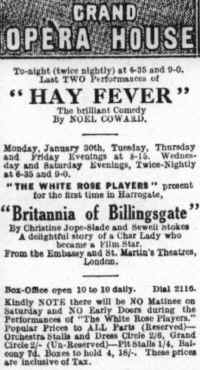
"The Stone-Slinging Matron"
This article, which dates from 1916, is about the social changes that were occurring in
British society at the time and how older ladies who were brought up with Victorian values
did not understand the behaviour and attitudes of the younger generation of women. At the time of writing, the title of the magazine it was published in and the
issue date are unknown to me.
"Babies"
The Illustrated Sunday Herald, May 6, 1917
This article was described by the press at the time as a dissertation, containing some
home truths, on the subject of "cradle cant".
"The Unvoiced Middle-Class"
Lady's Pictorial, June 23, 1917
"Army Life is a Love Reviver"
Pearson's Weekly, July 21, 1917
" 'Swot That Thing! It's New.' "
Lady's Pictorial, July 28, 1917
"Why People Play With Love"
Pearson's Weekly, August 25, 1917
"The 'Unimaginative' English"
Lady's Pictorial, September 22, 1917
"Do Women Love By Instalments?"
Pearson's Weekly, June 1, 1918
"When Love is a Lie"
Pearson's Weekly, March 8, 1919
"Pity the New Poor"
The Home Magazine (British edition), February 1920
"Give Me a 'Happy Book' "
The Home Magazine (British edition), (I believe this article appeared in either
the December 1920 or January 1921 edition of The Home Magazine)
"Why Do You Hate Me?"
The Royal Magazine, February 1921
"An Endless Test of Strength"
The Evening News, October 9, 1928
This is the third in the "Love—As I See It" series of nine
articles by various authors that ran in The Evening News from October 4—23,
1928.
"This Deadly Romantic Drowse"
London Soroptimist, November 1928
In this article, Christine Jope-Slade took issue with female magazine editors for the glut
of "sloppy love-literature" that she felt was giving young women overly romantic
expectations—and making them too dreamily distracted to fully concentrate on their
careers. "Doped" with sentimental "love-mush" was how she put it!
"Should I Make My Son a Gentleman?"
The Evening News, December 20, 1928
"Jazz is Gnawing at Family Life"
The Evening News, January 8, 1929
Christine Jope-Slade, in common with fellow author Violet Quirk, had some misgivings about
the jazz phenomenon. Here is a quote from her article: "Jazz has been more lasting,
more universal, in its effect on the world, than any great religious revival or world
catastrophe."
"These New Creatures!"
The Evening News, January 15, 1929
"Rich Wives and Poor Husbands"
The Evening News, January 22, 1929
"The New Chivalry of Women"
The Evening News, January 30, 1929
"I Am Afraid of London"
The Evening News, March 26, 1929
"Our New Disloyalty"
The Evening News, April 4, 1929
"And Now Love is Going Out of Fashion!"
The Evening News, May 27, 1929
"Play-Actors We Are!"
The Evening News, June 20, 1929
"What Has Happened to Home?"
Woman's Journal, July 1929
"I Do So Hate This 'Common Sense' !"
The Evening News, July 22, 1929
Christine Jope-Slade could be very funny at times. Here is a quote from this article:
"After a quarter of an hour I wish the woman who has 'more common sense in her little
finger than most people have in their whole bodies' had left the little finger at home on
the dressing-table."
"Scandal—That Social Necessity!"
The Evening News, August 27, 1929
"Give Me the Casual Person!"
The Evening News, September 10, 1929
"Those Little Extravagances of Ours!"
The Evening News, September 20, 1929
"That Lost Feeling ..."
The Evening News, September 27, 1929
"You Cannot Please Everybody!"
The Evening News, October 18, 1929
"The Bravery of Well-to-do Women"
The Evening News, November 7, 1929
"Myself as My Children See Me"
Good Housekeeping (British edition), December 1929
"It's Not a Woman's World!"
The Clerkenwell News and Evening Chronicle, December 10, 1929 (this newspaper was
also known as The Daily Chronicle)
The Liverpool Post and Mercury, December 10, 1929 (this article is printed here
under the title "Not a Woman's World")
The Cairns Post (Queensland, Australia), February 7, 1930 (this article is
reprinted here under the title "A Man's World")
"Pernicious Personality"
The Quiver, 1930 (this was a weekly publication; issue date unknown)
" 'No!' "
Woman's Journal, March 1930
"But There is Still Beauty!"
Cassell's Magazine, July 1930
"Getting to Know Yourself"
Woman's Journal, September 1930
"Is Love a Limelight Turned on Self?"
The Daily Standard (Brisbane, Queensland, Australia), September 20, 1930
Subtitled "Beautiful Habit for Everyday Life", this is a reprint of an
article that had previously appeared in the British periodical Woman's Pictorial.
The original issue date is unknown.
"My Children are Only Loaned to Me"
The Daily Herald, September 22, 1930
This piece was Christine Jope-Slade's contribution to a series of articles written by
various authors under the umbrella title "You and Your Children".
"Daughters Are Still Two-a-Penny"
The Daily Herald, November 7, 1930
This article is subtitled "Mothers Make Too Much Fuss of Their Sons".
"Our Daughters of 1931"
The Grimsby Daily Telegraph, December 31, 1930
The Daily Mail (Hull, Yorkshire), January 3, 1931
The Lincolnshire Echo, January 5, 1931 (this article is reprinted here under the
title "Give Miss 1931 a Fair Chance")
"A National Dish: Importance of the Fried Fish
Industry"
The Shields Daily News (Northumberland), January 26, 1931
The Nottingham Evening Post, February 13, 1931 (this article is reprinted here
under the title "New National Industry: Biggest Fried Fish Shop in the World")
Interestingly, it was an early morning visit to Billingsgate market that Christine
Jope-Slade made in order to research this article which gave her the inspiration to write
the short story "Britannia of Billingsgate", a tale that later became a play, a
novel and a successful feature film.
"Please Destroy My Letters!"
The Quiver, February 1931
"Good Parents in the Background"
The Daily Standard (Brisbane, Queensland, Australia), April 4, 1931
Subtitled "The Child As a Separate Person", this is a reprint of an
article that had previously appeared in the British periodical Woman's Pictorial.
The original issue date is unknown.
"It Doesn't Matter!"
The Daily Herald, April 22, 1931
This short piece was Christine Jope-Slade's contribution to a round robin article entitled
"Her Age—Should She Tell It?". The discussion was in the form of
an all-female census, wherein prominent women provided their answer to the question posed
by the title. Among the other contributors were Gracie Fields (the comedienne), May
Edginton (the playwright), Ellen Wilkinson (the M.P.), Ethel Mannin (the novelist) and
Winifred Brown (the airwoman).
(article title unknown)
Woman's Journal, May 1931
The subject of marriage was the theme of this article. Although I have never read it, I
came across the following quote from Christine Jope-Slade's piece: "I have nothing
but contempt for the brittle, petty, puny, mangy, soggy attitude towards marriage by those
who have never tried it." That's them told!
"Starting Married Life Again"
Home Chat, 1931 (issue date unknown)
The Propeller (Hurstville, New South Wales, Australia), May 29, 1931
"Men Like the Girls They Can Forget"
The Evening News, July 9, 1931
"Being a Wife To-day"
Cassell's Magazine, August 1931
"Mother Is the Child's Safety Valve"
The Daily Standard (Brisbane, Queensland, Australia), October 24, 1931
Subtitled "Is There Self-Glorification in a Career?", this is almost
certainly a reprint of an article that had previously appeared in a British periodical.
The original publication details are unknown, although I suspect it was first published in
Woman's Pictorial.
"Memory"
The Daily Herald, October 30, 1931
This piece was Christine Jope-Slade's contribution to a series of articles written by
various authors under the umbrella title "The Thing I'd Cling to".
"Money Won't Buy Christmas"
Weldon's Bazaar of Children's Fashions, November 1931 (this edition was
advertised as a "double-gift number" of the magazine)
"American vs. English Housekeeping"
On November 13, 1931 the WOR radio station in Newark, New Jersey broadcast this talk by
Christine Jope-Slade which she gave on one of her trips to the United States. Fun fact: At
the end of her visit to New York, she boarded the White Star Line motorship Britannic,
bound for Liverpool, on November 20, 1931.
"But We Didn't Marry Them!"
Woman's Journal, January 1932
"Do You Want Your Sons to Be Gentleman?"
The Daily Standard (Brisbane, Queensland, Australia), January 23, 1932
This is a reprint of an article that first appeared in the British magazine Woman's
Pictorial. I have been unable to identify the original issue date.
"Gossip"
John Bull, April 23, 1932
This piece was Christine Jope-Slade's contribution to a series of articles written by
various authors under the umbrella title "The Seven Deadly Sins of To-day".
"My Holiday with the Children"
Cassell's Magazine, May 1932
"Unceasing Toil"
John Bull, May 14, 1932
This very short piece was Christine Jope-Slade's contribution to an article written by
"fourteen British mothers" on the subject of Lindbergh baby kidnapping.
"Should Authors Put Real People Into Their
Books?"
Good Housekeeping (British edition), August 1932
This symposium piece was cowritten by Sewell Stokes, who in the debate felt that writers
should use real people in their stories, whereas for Christine Jope-Slade, her answer to
the question was "definitely not"!
(no title given)
The Evening Despatch (Birmingham), January 7, 1933
This is a very short piece which appeared among other contributions from well known people
of the time under the umbrella title "The Sense I Treasure Most". Out of the
five senses, Christine Jope-Slade chose sight as the one she most valued.
"Christine Jope-Slade Goes to America"
Woman's Journal, March 1933
This is the first of a series of articles in which Christine Jope-Slade chronicles a trip
she made to New York. The initial instalment marks the beginning of her travelogue and is
an account of the "preparations and formalities of departure", with the
culmination being "five days of life in the wonder ship Majestic". I
have been unable to identify any further articles in this series, apart from several
syndicated reprints in Australian newspapers of "At Klein's, New York". I also
do not know how long the series ran for in Woman's Journal.
" 'Queen Cophetuas and Beggar Men' "
Woman's Pictorial, (issue date unknown)
The Daily Standard (Brisbane, Queensland, Australia), March 25, 1933
This article discussed the question of whether or not a woman should propose to a man.
Christine Jope-Slade's answer was "yes, she can"!
(article title unknown)
Good Housekeeping (British edition), April 1933
An advertisement for the April 1933 edition of Good Housekeeping described this
article as an "account of an unusual hospital where appetites are tempted". I
presume this was a medical establishment that provided haute cuisine as opposed to
standard hospital food!
"Bachelors Belong to Everybody"
Woman's Journal, July 1933
(article title unknown)
Good Housekeeping (British edition), July 1933
In this article, Christine Jope-Slade transcribes the interviews she conducted with young
women who in 1933 were prize-winning students at the Royal Academy of Dramatic Art.
"At Klein's, New York"
Woman's Journal, (issue date unknown; circa 1933)
The Wellington Times (New South Wales, Australia), July 10, 1933 (this article is
reprinted here under the title "Wonderful: At Klein's, New York")
The Grenfell Record and Bland & Lachlan Districts Advertiser (New South
Wales, Australia), July 17, 1933
The Daily Advertiser (Wagga Wagga, New South Wales, Australia), July 27, 1933
The Lithgow Mercury (New South Wales, Australia), August 16, 1933 (this article
is reprinted here under the title "Choosing a Frock: At Klein's, New York")
The Inverell Times (New South Wales, Australia), January 10, 1934 (this article
is reprinted here under the title "Dense Crowds: N.Y. Bargain Store")
This article is one of several in the "Christine Jope-Slade Goes to America"
series that ran in Woman's Journal during 1933. The "Klein's" of the
title refers to the New York City department store S. Klein, named after its founder,
Samuel Klein (1886-1942). Situated on Union Square in Manhattan, it was said to be the
largest women's clothing shop in the world.
"Valentino Still Lives"
Nash's—Pall Mall Magazine, August 1933
The Greenock Telegraph and Clyde Shipping Gazette (Strathclyde, Scotland), August
12, 1933 (this article is reprinted here under the title "Magic Name of Dead Film
Star")
This is an article about the Italian actor Rudolph Valentino (1895-1926) and the efforts
of the Valentino Association, which was founded by Miss Marie Elliott, to preserve his
memory.
"A Nursery for Stars"
Good Housekeeping (British edition), January 1934
In this article, Christine Jope-Slade reports on her visit to the Italia Conti Academy of
Theatre Arts in London, which was a school for child actors who wished to appear on stage
and screen.
"Mrs. Brown"
The English Review, June 1934
"I Do Believe in Early Marriage"
Weldon's Bazaar of Children's Fashions, June 1934
"What the Screen Calls Love"
Woman's Filmfair, June 1934
"Authors and Their Homes"
Weldon's Ladies' Journal, September 1934
Please note this is not an article by Christine Jope-Slade. It is a feature that appeared
in the home and homecraft section of Weldon's Ladies' Journal in which Gilbert
Frankau, Denise Robins and Christine Jope-Slade allowed the magazine to visit their homes
and report on the decor, furnishings and domestic lifestyle of each writer.
"A Woman Looks at the News"
The News Chronicle, September 1, 1934
"A School to Remember With Delight"
Good Housekeeping (British edition), October 1934
In this article, Christine Jope-Slade describes her visit to St. Helen's School for girls
in the town of Northwood, Middlesex.
"Let's Think About Schools"
The Passing Show, October 6, 1934
"Writing for the Screen"
The Writers' Desk Book, A. & C. Black, 1934
Intended as a volume to inspire writers and provide useful information, The Writers'
Desk Book included articles by a number of authors about the craft of writing, tips
on journalism and selling short stories, novels and plays to various markets. Christine
Jope-Slade, along with the likes of Leonora Eyles, L. A. G. Strong and John Brophy,
contributed to the section that gave advice on writing screenplays.
"No Longer Modest"
Woman's Journal, January 1935
"People You Dislike DESTROY You!"
The News Chronicle (formerly The Daily News), January 7, 1935
"This Year of Good Hope"
Weldon's Ladies' Journal, February 1935
"Shall I Stay in My Generation?"
Good Housekeeping (British edition), March 1935
The Upper Murray and Mitta Herald (Tallangatta, Victoria, Australia), September
12, 1935 (this article is reprinted here under the title "In My Generation")
The Woodend Star (Victoria, Australia), September 28, 1935 (this article is
reprinted here under the title "In My Generation")
The Gnowangerup Star and Tambellup-Ongerup Gazette (Western Australia),
January 4, 1936 (this article is reprinted here under the title "In My
Generation")
The Port Macquarie News and Hastings River Advocate (New South Wales, Australia),
January 11, 1936 (this article is reprinted here under the title "In My
Generation")
"Black Traffic in Babies"
The News Chronicle, June 11, 1935
"Are You in Pawn to Your Future?"
Pearson's Magazine, July 1935
In this article, according to an advertisement for the July 1935 edition of Pearson's
Magazine, Christine Jope-Slade asks the thought-provoking question: "How much of
to-day is passed in thinking about to-morrow?"
" 'Better Tear It Up' "
The News Chronicle, July 19, 1935
"Are You a Dutch Aunt?"
The News Chronicle, August 7, 1935
(article title unknown)
Good Housekeeping (British edition), September 1935
"Why Do Men Hide Behind Women?"
The Daily Mirror, November 29, 1935
In this article, Christine Jope-Slade provides numerous examples of how women take on more
than their fair share of worries and are compelled to be realists. Her own realism was
revealed when she told the editor of The Daily Mirror that more women than men
would read the article. In her own words: "Men will know it's true—and dodge
it!"
"Personality Section"
Woman's Fair, December 1935
I believe this to be the opening instalment of a new column in the magazine. An
advertisement for the December 1935 edition of Woman's Fair described Christine
Jope-Slade as an "eminent novelist and playwright-psychologist" and went on to
say that in this new feature she "introduces you to yourself in the first of a series
of frank, intimate talks". Another advertisement I came across suggested that her
column was about "your personality and social success".
"Do You Really Want a Clever Child?"
The Daily Mirror, February 5, 1936
(article title unknown)
Woman's Fair, March 1936
Advertisements for the March 1936 edition of Woman's Fair noted that in her
article, Christine Jope-Slade asks readers questions which are "vital" and
"have a great bearing" on their happiness. I believe this article is in fact
another entry in the ongoing "Personality Section" column that began with the
December 1935 issue of Woman's Fair.
"Ambitious Young Men Ought to Marry ..."
The Evening News, March 31, 1936
It should be noted here that the title of this article is a little misleading. In her
piece, Christine Jope-Slade challenges this assumption and discusses the social context
and practicalities of marriage. "Ambitious Young Men Ought to Marry
..." was the sixth and final article in a series written by various authors that ran
in The Evening News under the umbrella title "A Guide to Young Men in
Love". A photo of Christine Jope-Slade with her son, David, was printed alongside the
article, which I have reproduced below:
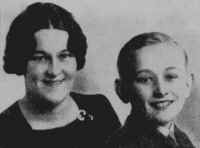
Christine Jope-Slade and her son, David in 1936.
"For Me, 'Silver Threads' !"
The Evening News, April 8, 1936
This article is a follow-up to one that was published in the newspaper the day before in
which Angela Milne expressed her dislike of working for older people. In her piece,
Christine Jope-Slade provides a counterargument.
"Love is Life"
Weldon's Ladies' Journal, May 1936
The Advocate (Burnie, Tasmania, Australia), July 11, 1936
This symposium piece was cowritten by Gilbert Frankau. An advertisement for the May 1936
edition of Weldon's Ladies' Journal described this article as an
"interesting debate" between the two authors.
"What Kind of Lover Are You?"
Woman's Fair, May 1936
I have been unable to verify whether this is a standalone article or part of the
"Personality Section" column that began with the December 1935 issue of Woman's
Fair.
(article title unknown)
Woman's Journal, September 1936
This article was described in an advertisement for the September 1936 edition of Woman's
Journal as follows: "Christine Jope-Slade discusses whether candid criticism or
the sweets of adroit flattery are the more helpful in life."
"What is a Good Mother?"
The Evening News, September 25, 1936
This piece was Christine Jope-Slade's contribution to a series of articles written by
various authors on the subject of personal values in the home. Her articles were always
thoughtful and opinionated. At times she could be provocative, in a forward-thinking way;
very much in sympathy with the younger generation. Christine Jope-Slade expressed her
views on motherhood clearly and entertainingly in "What is a Good Mother?". Here
is a quote from it: "The good mother, as I see her, lets her children say anything
and air loudly what views they will, however outrageous, vitriolic or anti-social."
(article title unknown)
Mother and Home and Weldon's Bazaar of Children's Fashions, October 26,
1936
"Marriage Questionnaire"
The Evening News, November 12, 1936
Subtitled "And How They All Answered It" (the questionnaire, obviously!), this
piece, technically speaking, is a work of fiction. It is presented as an article, with the
following characters giving their answers to the questionnaire of the title: her mother,
her father, his mother, his father, his great friend and her great friend. Perhaps
"humorous sketch" is a better way to describe this piece, which is rather funny.
Here's an excerpt from the bride's great friend, giving her thoughts on the newlyweds:
"I hope she'll be gorgeously, divinely happy and adore everything. He's beautifully
house-trained and rather a pet really—but, take it from me, he's no Gary
Cooper."
"If I Married Again"
The Evening News, November 19, 1936
In this article, Christine Jope-Slade, who remained a widow and never remarried, argues
that politeness and good manners are very important qualities in a husband.
"Hen-Pecked Children"
The Daily Mirror, November 25, 1936
"Quaint Christmas Legends"
Mother and Home and Weldon's Bazaar of Children's Fashions, November 27,
1936
"Is Your Home Like This?"
The Daily Mirror, November 30, 1936
"Conversation Without Tears"
The Evening News, December 1, 1936
(article title unknown)
Woman's Journal, January 1937
(article title unknown)
Weldon's Ladies' Journal, March 1937
(article title unknown)
Good Housekeeping (British edition), March 1937
In this article, Christine Jope-Slade discusses the relationship of mother and daughter.
"Clever Men Marry Clever Fools"
The Midland Daily Telegraph (Coventry, West Midlands), March 10, 1937
"Let Us Be Gay and Cheerful Grannies"
The Midland Daily Telegraph (Coventry, West Midlands), March 31, 1937
"I Blame the Parents"
The Daily Sketch, May 7, 1937
Christine Jope-Slade, in this provocative article, argued that inadequate parenting was
largely responsible for a recent upsurge in juvenile delinquency that occurred across
England at the time. Here is a revealing excerpt: "I know that the care of spirited,
restless, eager children is no picnic. I have had three pretty mercurial and adventurous
young of my own."
"The Art of Jessie Matthews"
The Strand Magazine, June 1937
In this article, Christine Jope-Slade provides details about the life and career of the
stage and screen actress Jessie Matthews (1907-1981).
"Classes for Those About to Marry"
The Daily Sketch, June 19, 1937
The Standard (Montreal, Canada), December 18, 1937
"The Clever Englishman"
The World-Herald (Omaha, Nebraska), August 10, 1937
The Daily Argus-Leader (Sioux Falls, South Dakota), August 14, 1937
These are excerpts from an article that was first published in Woman's Journal.
The original issue date is unknown.
"Mothers, Let Them Go"
The Daily Sketch, August 12, 1937
"Cotton-Wool Children"
The Daily Sketch, September 8, 1937
The Standard (Montreal, Canada), October 23, 1937
"Marriage Appeal"
The Daily Sketch, November 9, 1937
"Exams for Wives—No, Thank You!"
The Daily Sketch, January 7, 1938
Christine Jope-Slade was inspired to write this article after reading in the news that
Adolf Hitler was instigating a system in Germany where young women must pass an
examination before they got married. As a feminist, she unsurprisingly took issue with
this and eloquently set out her very reasonable objections to such an autocratic and
chauvinistic idea. Interestingly, Christine Jope-Slade mentions in this article that she
and her children spent their summer holiday in 1937 at a hotel in the Black Forest. They
were the only English family staying there, which gave her an insight into how wives and
mothers in that country were treated, as she saw it, with contempt.
"What is the Right Age to Marry?"
The Daily Sketch, March 10, 1938
This symposium piece was cowritten by the author F. E. Baily (1887-1962). Christine
Jope-Slade thought the ideal average ages for a bride were 19 and 20 while for a groom, 24
and 25. Representing the male point of view, Baily opined that it should be 26 for a woman
and 28 for a man. The Daily Sketch asked readers what they thought and offered
ten and sixpence for any letters sent in on the subject that were published in the
newspaper.
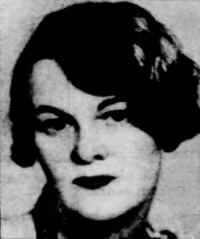
Photo of Christine Jope-Slade that appeared alongside the article "What is the
Right Age to Marry?".
"Modern Woman Can't Afford Love"
The Daily Sketch, May 19, 1938
"The Woman You Want to Be ..."
The Daily Sketch, July 9, 1938
"I Would Be a Matchmaker ..."
The Daily Sketch, July 16, 1938
"Take Your Wife Into Partnership"
The Daily Sketch, July 29, 1938
The Catholic Freeman's Journal (Sydney, New South Wales, Australia), November 10,
1938
(article title unknown)
Good Housekeeping (British edition), August 1938
"Is Your Child Ashamed of You?"
The Daily Sketch, September 2, 1938
"Rules for a Model—Wife—Husband"
The Catholic Freeman's Journal (Sydney, New South Wales, Australia), September 8,
1938
This is almost certainly a reprint of an article that had previously appeared in a
British periodical. The original publication details are unknown.
"Borrowed Babies"
The Catholic Freeman's Journal (Sydney, New South Wales,
Australia), November 3, 1938
This is almost certainly a reprint of an article that had previously appeared in a
British periodical. The original publication details are unknown.
"Beautiful Picture of Us"
Eve's Journal, February 1939 (this was a weekly publication; issue date unknown)
This piece is Christine-Jope Slade's editorial for a February 1939 issue of Eve's
Journal. She was in fact the editor of this magazine.
"You Can't Insure Against Love"
The Daily Sketch, June 14, 1939
"Stop—And Think Again"
The Daily Herald, January 18, 1940
The Auckland Star (New Zealand), March 20, 1940
This piece was one of two that were printed alongside each other under the caption:
"Advice by Two Women to Those About to Marry in Wartime." The other article, by
Florence White, was entitled "Go Ahead".
"The Birthrate Problem"
The Waikato Times and Thames Valley Gazette (New Zealand), April 20, 1940
This is almost certainly a reprint of an article that had previously appeared in a
British periodical. The original publication details are unknown.
"The Parents' Choice"
The Waikato Times and Thames Valley Gazette (New Zealand), May 11,
1940
This is almost certainly a reprint of an article that had previously appeared in a
British periodical. The original publication details are unknown.
"Romance"
Weldon's Ladies' Journal, June 1940
(article title unknown)
The Sunday Graphic, August 18, 1940
An advertisement for the August 18, 1940 edition of The Sunday Graphic described
Christine Jope-Slade's contribution as a "page for women."
"Women Cursed By Household Gods"
The Waikato Times and Thames Valley Gazette (New Zealand), November 2, 1940
This is almost certainly a reprint of an article that had previously appeared in a
British periodical. The original publication details are unknown.
"I Want to Know the Reasons"
The Daily Herald, March 17, 1941
This article appeared as part of an ongoing feature in The Daily Herald entitled
"She". Various topics were discussed in this column and among the other
contributors—all of them women—were
Vera Brittain, Dorothy Black and Lesley Storm.
"Much Better World for Women"
The Newcastle Journal and North Mail, March 29, 1941
The full title for this article, as it appeared in The Newcastle Journal and North
Mail, was "A Woman Novelist Says it is Now a Much Better World for Women".
"Don't Make Gods of Our Fighting Men!"
The Evening Express (Aberdeen), June 28, 1941
The Evening Chronicle (Newcastle), June 30, 1941
"Are You Unreasonably Reasonable?"
The Waikato Times and Thames Valley Gazette (New Zealand), July 26, 1941
This is almost certainly a reprint of an article that had previously appeared in a
British periodical. The original publication details are unknown.
"Five Minutes for Myself"
Woman's Friend and Lady's Companion, August 29, 1941
The Advocate (Burnie, Tasmania, Australia), June 13, 1942
This is a beautifully composed piece in which Christine Jope-Slade recommends that
everyone, no matter how bad their day is going, takes some time out to reflect on the many
acts of kindness that people have shown them in the past. She also states that in her
opinion, despite the horrors visited on people by the war, humanity is in a better place
in 1941 than when she was growing up. I believe a part of this reasoning was a reflection
of the many social changes that had taken place in British society which she witnessed in
the early decades of the twentieth century, such as women gaining more independence and
the gradual erosion of the class system, which only 20 years before was much more rigid in
Britain. "Five Minutes to Myself" was one of the last articles she ever wrote,
which makes it even more poignant to read. She died too young at the age of 50.
"Middle-Aged Women Win Their Battle in Britain"
The Montreal Daily Star (Quebec, Canada), December 27, 1941
The Kitchener Daily Record (Ontario, Canada), January 9, 1942 (this article is
reprinted here under the title "British Women Enter New Life of Wider Service")
These are reprints of an article that first appeared in the British magazine Answers.
I have been unable to identify the original issue date. The title I have given here is as
it was published in The Montreal Daily Star, but I should note that it may well
have had a different title when the article was first printed in Answers.
Interestingly, Christine Jope-Slade mentions in this article that she had recently been to
London to attend an interview for a job "under the auspices of the Supplementary
Register". This government body, active in the Second World War, was responsible for
finding wartime employment for civilians in Britain. Christine Jope-Slade was not
impressed with the rudeness of the selection committee!
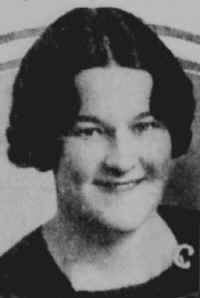
Christine Jope-Slade in 1936.
Sources and Acknowledgments:
In the process of compiling this bibliography, as well as referring to my own
collection of literature and the research I have done at the British Library Newspaper
Library, a number of other sources were consulted, not the least of which was Philip
Stephensen-Payne's Galactic Central
website, the home of William G. Contento's Fictionmags Index.
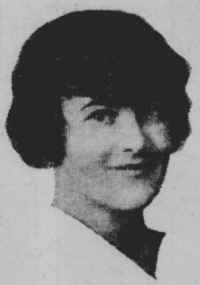
Photo of Christine Jope-Slade from The Evening News.
Addenda:
Please note that in the Short Fiction
and Articles sections of this webpage, The
Evening News and The Star refer to the London evening newspapers that bore
those titles.
The book Letters to My Unborn Son, written in 1916 and published by C. Arthur
Pearson the following year, is a nonfiction work by Christine Jope-Slade. A contemporary
newspaper review of her volume of letters, which expressed Jope-Slade's hopes and fears
for the future of her first child, described the author as a "young war wife".
Her husband, Leslie Clark, was away at the time serving his country as a soldier during
the First World War while she was an expectant mother.
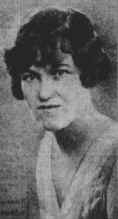
Christine Jope-Slade in the 1920s.
It is worth mentioning here that during the 1920s and 1930s, newspapers
would often print selected quotes by Christine Jope-Slade; these were what we may term, in
modern parlance, as "soundbites"! These were often insightful, always wise and
were more often than not thoughtful snippets of social commentary that were culled by
editors from her various articles. Here is a choice example that, given the increasing
cases of dementia in older people, is strikingly relevant to us today: "If suddenly I
was to be denuded of all the things that appear to make life worthwhile—all
but one? Then I would choose neither my health. Nor my wealth. Neither my children ... I
would choose memory." On a lighter note, she was very much appreciated in Fleet
Street for her humour. This from journalist Cecil Hadley, writing in The People:
"Next to A. Jympson Harman, the funniest name in the world of letters is, I think,
Christine Jope-Slade. As we say in the newspaper world, 'she delivers the jope.' "
I would like to say a few words about her newspaper articles. They make for entertaining
reading. Christine Jope-Slade pursued her writing career with vigour, as well as being a
mother to three children. She lived in a period when women were gaining more rights and
independence, and these things are very much reflected in her articles, in which she
offered her thoughts from the perspective of a feminist. At times, Christine Jope-Slade
would freely admit that she was of a generation caught between a Victorian upbringing—more than once she remarked how horrified her grandmother would have
been at the antics of modern women!—and the attitudes of those
born a decade or two later than she was. In general, she sided with progress, forward
thinking, and rightly saw young people as the future. Her articles are succinct and
thought provoking. On the one hand, this was a case of a journalist doing her job well. On
the other, her often provocative opinions seemed to come straight from the heart. I have
noticed that when she strongly objected to something, she was merciless in laying out all
her reasons for being annoyed. A perfect example of this was when she wrote a piece in
response to the news that in Nazi Germany, Adolf Hitler had proposed to make young women
sit exams before they got married. But whatever the subject, in her articles she argued
things out in a way that did not entirely dismiss the opposing point of view—with
the exception of Hitler, of course. Christine Jope-Slade was certainly open to a healthy
debate, as evidenced by the symposium pieces she contributed to; happy to share a page
with another who disagreed with her point of view! Her short stories are intense, literate
and sometimes lyrical. They invite exploring and what a shame there has never been a book
collection of them. Christine Jope-Slade's novels are marvellous. As with her short
fiction, they are period pieces in some ways, but the characterisation and dialogue are
superb. I have enjoyed reading everything by her, but I find myself particularly drawn to
Christine Jope-Slade's articles. Although they were written so long ago, much of what she
had to say is still relevant. She was firing on all cylinders when she wrote them, and
they gained her much respect in Fleet Street among her fellow journalists.
At the time of writing, "Britannia of Billingsgate" is the only short story by
Christine Jope-Slade I am aware of that was turned into a play. I believe there was at
least one other, having seen a reference to one of her short stories becoming a stage
success in Vienna in the 1930s. Unfortunately, I have been unable to identify the title of
the play or the original story.
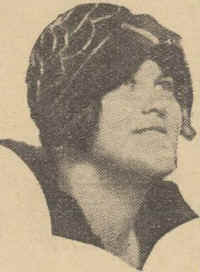
Photo of Christine Jope-Slade from The Daily Mail.
In the late 1930s, Christine Jope-Slade was the editor of the weekly
periodical Eve's Journal, which was published by C. Arthur Pearson. It was seen
at the time as a competitor to Lilliput and a companion to Men Only. The
first issue of Eve's Journal appeared on the newsstands in 1937. A short-lived
magazine, it is unclear how long it lasted, although I suspect Mike Ashley is right in
thinking that the rationing of paper in Great Britain, which took hold at the start of the
Second World War, was the reason it ceased publication. I have also been unable to verify
the start and finish dates of her tenure as editor. However, it has been said that she ran
the magazine, which makes me think she was at the helm of Eve's Journal for the
duration.
She also wrote a personal advice column for Nash's—Pall
Mall Magazine from April 1934 to March 1935. Her "agony aunt" page was
titled "Dear Christine". Fun fact: In the same periodical, Christine Jope-Slade
recommended to readers Aquilox Tonic Tablets, for those with nervous or other ailments!
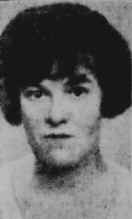
Photo of Christine Jope-Slade from The Evening News.
The 1935 feature film Forbidden Heaven was said to be based on a
novel by Christine Jope-Slade. At the time of writing, I have been unable to identify the
original title of her tale. An announcement in the press that the film was forthcoming
suggests that Christine Jope-Slade's story was called "Forbidden Sinners".
However, I am not aware of any short story or novel by her under that title. I suspect it
may have been a novel-length story that was serialised in a newspaper or magazine and
never published in book form. The movie was made by Republic Pictures and directed by
Reginald Barker. It starred Charles Farrell, Charlotte Henry and Beryl Mercer. Sada Cowen
and Jefferson Parker wrote the screenplay.
Another movie that was released in 1935, The Mad Hatters, directed by Ivar
Campbell, was based on an original story by James Stewart which Christine Jope-Slade
adapted into a screenplay.
I have seen a reference to a novel by Christine Jope-Slade called The Star-Maker
as being due to be published in the autumn of 1934 by the New York City based publishing
house Crown. It would seem that this book never saw the light of day, as it is not listed
in the Library of Congress Catalog and I have seen no other mention anywhere on the
internet about this book. In July 1936, another "phantom" novel by Christine
Jope-Slade entitled Bad Box Office was announced in an advertisement by the
London based publisher Ivor Nicholson & Watson as being due to be published in the
autumn of 1936. However, I do not believe the book ever saw publication. I have found no
trace of it anywhere, including a search of The British Library Public Catalogue. A third
missing novel, Silver City, was mentioned by the same publisher in an
advertisement that appeared in July 1937. As with Bad Box Office, Silver City
was scheduled to be published in the autumn of that year, and yet I have been unable to
find any evidence that the novel was ever published. It is curious indeed that, for
whatever reason, Crown and Ivor Nicholson & Watson decided to withdraw these books
from publication. The Star-Maker in particular sounds very interesting from the
description. Christine Jope-Slade apparently drew on her inside knowledge of the film
industry for this novel, which was about the jealousies, tempers and egotistical
personalities of a group of people on the set of a major motion picture. It was said that
in The Star-Maker, Christine Jope Slade examines the glamour of movie-making and
"kindly, but shrewdly" dissects it! What a shame that these three novels, at
least to my knowledge, were never published.
A short story by Christine Jope-Slade entitled "Enemy Alien" appeared in the
magazine Woman. This was a romantic tale about a handsome veterinary surgeon who
falls in love with a young lady who keeps Irish Terriers. I have been unable to find out
which issue of Woman this story was published in. As an aside, I know Christine
Jope-Slade was fond of dogs and kept them as pets.
A Miss Marjorie Deans was secretary to a number of authors. These included G. B. Stern,
Michael Arlen and Christine Jope-Slade. Deans wrote about her experiences in an article
that appeared in the July 20, 1937 issue of the London evening newspaper The Star.
I have not read her piece, but suspect it contains some great insights!
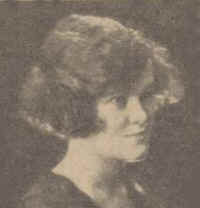
Photo of Christine Jope-Slade from The Daily Mirror.
Christine Jope-Slade, half-Irish by descent, was the byline and preferred name used by Christiana Vernon Jope-Slade, who was born in the offices of the publisher William Heinemann on Bedford Street in Holborn, London on Friday, May 13 of 1891. Referring to her place of birth to an American journalist in 1931, she described it as a "flat above a bookstore in Covent Garden". The shop was in fact Heinemann's own retail outlet while the floor above housed the publishing side of the business. Christine Jope-Slade went on to waggishly claim that the first person she ever screamed at was Hall Caine. Indeed, it was said that when she was a baby, most of the writers who came upstairs to sign contracts assumed that she would one day be an author and tickle her under the chin! "I was born within sound of Bow Bells, so I am a real Cockney," she averred to the same American newsman, "but I always pray I don't speak like one." Christine Jope-Slade did indeed come from a literary background, as her father, Robert Jope-Slade (1858-1897), who died when she was very young, was an eminent journalist, editor and drama critic. Originally from Torquay, Robert Jope-Slade, the son of a harbour master, contributed numerous articles to newspapers and wrote for the agricultural journal The Field before he embarked on a literary career in London after moving there in his early 30s. He worked as a theatre reviewer for the London evening newspaper The Echo and in 1894 served as president of the Playgoers' Club.

Robert Jope-Slade (1858-1897)
Robert Jope-Slade married Rosa Annie Fitzgerald (1862-1957), the daughter of Henry Fitzgerald. Rosa, who preferred to be called Rose, was born in Wiltshire and grew up in Wales and Yorkshire. Their wedding ceremony took place at St. Thomas' Church in Portman Square, Marylebone on April 27, 1889. Christine Jope-Slade was the first of their two children. Her brother, Robert, was born in 1895 and named after his great-grandfather, grandfather and father, as she was after her paternal grandmother, Christiana Clampit Harvey Slade (1827-1890). After their father passed away in 1897, their mother, Rose, continued with Robert Jope-Slade's literary work and became the first woman to be a dramatic and art critic in London. While they were at school, Christine and her younger brother, light hearted as well as literary, were said to be nicknamed the "Joke-Slades"! Robert went on to attend Eton College and was a pilot in the First World War, later becoming a commander in the R.A.F. Christine Jope-Slade, meanwhile, was educated at a convent in Antwerp and as a young woman lived at various times in St. John's Wood, North London and the village of Great Missenden in Buckinghamshire. She married Leslie K. Clark, who was a soldier at the time, in Windsor, Berkshire in 1915. Remarking many years later that she had "married a uniform", in the same sentence Christine Jope-Slade was quick to point out that it was a happy marriage. A year after their wedding he was sent to serve in the British Army at Salonica (now known as Thessaloniki) in Greece. Her husband returned to England in 1918 and went on to become a well known Fleet Street journalist who worked as an editorial director for the Amalgamated Press and was editor-in-chief of several women's magazines. They had two sons, Michael and David Clark, born in 1916 and 1921 respectively and a daughter, Jill Christine Clark, who was born in 1923. The couple brought up their children in London. As a girl, Jill Clark was a talented dancer. She went on to study biology at college. All three of the children received a good education, with their parents endeavouring to send them to the best schools. Christine Jope-Slade was widowed when her husband passed away suddenly at their home in Maida Vale on June 11, 1928.
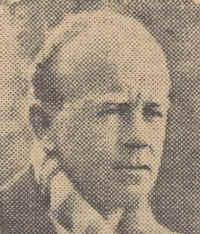
Leslie K. Clark (1889-1928)
By 1933, she and her children had a flat in Regent's Park and, early that year, Christine Jope-Slade made a trip to America, having previously visited the United States and Canada in 1925, 1927 and 1931. On one of her visits to New York, at a party hosted by Ruth and Maxwell Aley that was held in Julia Peterkin and Christine Jope-Slades' honour, she told the journalist William Gaines of her ambition to become an American citizen: "America is so energising, while England has become so depressing." Expanding on the reasons for her—then—aspirations to emigrate, she remarked: "Women are accepted as individuals here. If they have something to say, the men, as well as other women, will listen. Women have been subdued for so long in England. One feels it might be an impropriety for her to speak her mind in an assemblage. Here you have the rule of brain instead of the rule of sex. Intelligence is not frowned upon if it happens to be the possession of a woman. Just look about this party. You don't see any of the smart women trembling in a corner, do you?" I believe she was also fond of the American film industry; indeed, some literary critics at the time lamented that a few Americanisms had found their way into the dialogue of her novels. I suspect these were old guys and traditionalist snobs who disliked that kind of vocabulary! And, of course, several of her stories were made into films, so she had some personal involvement in the movie world. I am also aware that Christine Jope-Slade was familiar with Venice and Malta and at least once enjoyed a cruise in the Mediterranean Sea. She was also familiar with Paris, at times writing articles about that city. And Christine Jope-Slade was certainly social. This is evidenced by a number of her short stories being partly set in night clubs and restaurants; in general, scenes of social gatherings are sprinkled throughout her fiction. Further indications of Christine Jope-Slade's sociable nature can be found in the contents of the many informal essays she had published in newspapers, such as one in a 1930s edition of Woman's Fair, in which she gives advice to readers on how to relax and enjoy yourself at your own party. Christine Jope-Slade was also among many figures from the literary world who attended the seventieth birthday party of H. G. Wells, which was held in a London ballroom on October 14, 1936. Furthermore, I have come across numerous newspaper articles wherein it was mentioned that she was a guest, alongside other authors, at various social functions in London. An article written by Harold A. Albert (1909-1997), who was a distant relation of Christine Jope-Slade, appeared in the January 16, 1938 issue of Birmingham's Sunday Mercury and revealed that by this point, his authoress relative was living and writing stories in a former convent at Holly Place in Hampstead, North London, that she had made into her living quarters, with the chapel still active a few doors down from where she lived.
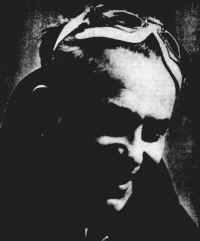
Michael Clark (1916-1939)
During this period, her eldest son, Michael Clark, who was educated at
Oxford and lived with his mother in Hampstead, had become a special correspondent for The
Sunday Chronicle after working as a plot-finder for Paramount Films. He left London
in April 1939 to embark on a motor-cycle tour of Europe and the Middle East, seeking
adventure. Upon his arrival in Palestine, he was said to have written: "Laugh this
off. I'm in Palestine and I've motor-cycled through Turkey, despite the moanings of those
people who said I'd never do it on account of the dogs and the flooded rivers." As a
journalist for The Sunday People, Michael Clark had been sending back a series of
articles to the newspaper entitled "The Diary of a Runaway Wage Slave". On May
16, 1939, he was shot dead, at the age of 22, from an ambush by Arab snipers, who had been
hiding in an orange grove, while he was motor-cycling through Palestine on his way from
Rehoboth to Tel Aviv. He had been visiting the son of Dr. Weizmann, a prominent Zionist
leader. I believe it was shortly after this, and with the onset of the Second World War,
that Christine Jope-Slade moved with her other two children from her home at Hanover House
in Regent's Park, London to Claygate in Surrey. Two years later, Christine Jope-Slade's
younger brother, Robert, still on active service during the Second World War, died in the
Persian Gulf during the Iraqi Revolt of 1941. He was buried at El Alamein. One can only
imagine the effect on the family of these losses, coming so close together. Christine
Jope-Slade passed away at her home in Arbrook Lane, Claygate on May 1, 1942. Her funeral
service took place three days later at Golders Green Crematorium in North London. In the
years shortly after she died, the London-based publisher Christophers issued a number of
reprint editions, due to popular demand, of The Little Girl Who Kept Fairies
(1924). Her name also lived on for decades through the various theatre, radio and
television adaptations of the play Britannia of Billingsgate. I believe Christine
Jope-Slade's second son, David Clark, died in Chichester, West Sussex in 1990. Her
daughter, Jill Christine Clark, had a long life. She passed away in 2019.
Christine Jope-Slade was a brilliant writer who deserves a literary revival. Love in a
Muddle (1920) has recently been republished and hopefully it will be followed by more
of her novels being brought back into print after so many years. Several book collections
of her short fiction would also be most welcome! She left behind a wonderful legacy of
superb novels, delightful short stories and fascinating feature articles.
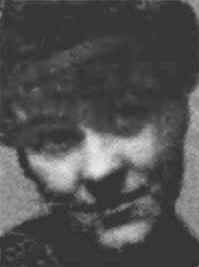
"You can insure against death, disaster, theft, rain and marriage.
You cannot insure against love."
- Christine Jope-Slade (1891-1942)
Email: marks3789@gmail.com
Copyright © 2026 Richard Simms